

Winter III: lyrics and translation
The sonnet from the 1725 print, line by line, with a translation. The letters are the ones printed over the notes.
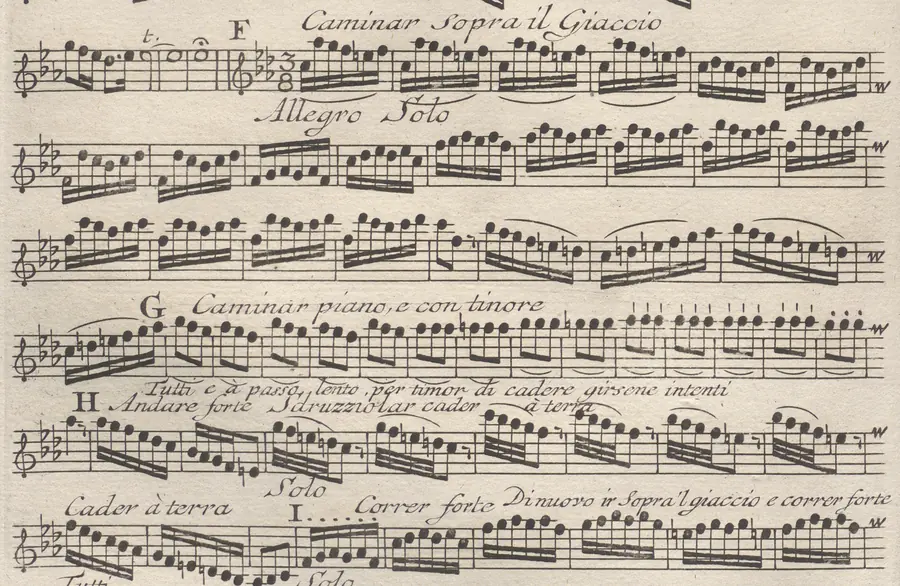
- Caminar sopra ’l giaccio, e à passo lentoto walk on the ice with slow steps,The soloist almost alone, with one long note in the cellos beneath - careful steps on the ice.In the score, over these bars: «Caminar sopra il Giaccio»
- Per timor di cader girsene intenti;treading carefully for fear of falling;Everyone plays except cellos and harpsichord: more careful still, for fear of falling.In the score, over these bars: «Caminar piano, e con timore»
- Gir forte sdruzziolar, cader à terrato go fast, slip, fall to the ground,Faster - and a sudden break: slipped, fell.In the score, over these bars: «Andare forte, sdruzziolar, cader à terra»
- Di nuovo ir sopra ’l giaccio e correr forteto go onto the ice again and run hard,Fast runs from the soloist - back onto the ice, and run.In the score, over these bars: «Correr forte»
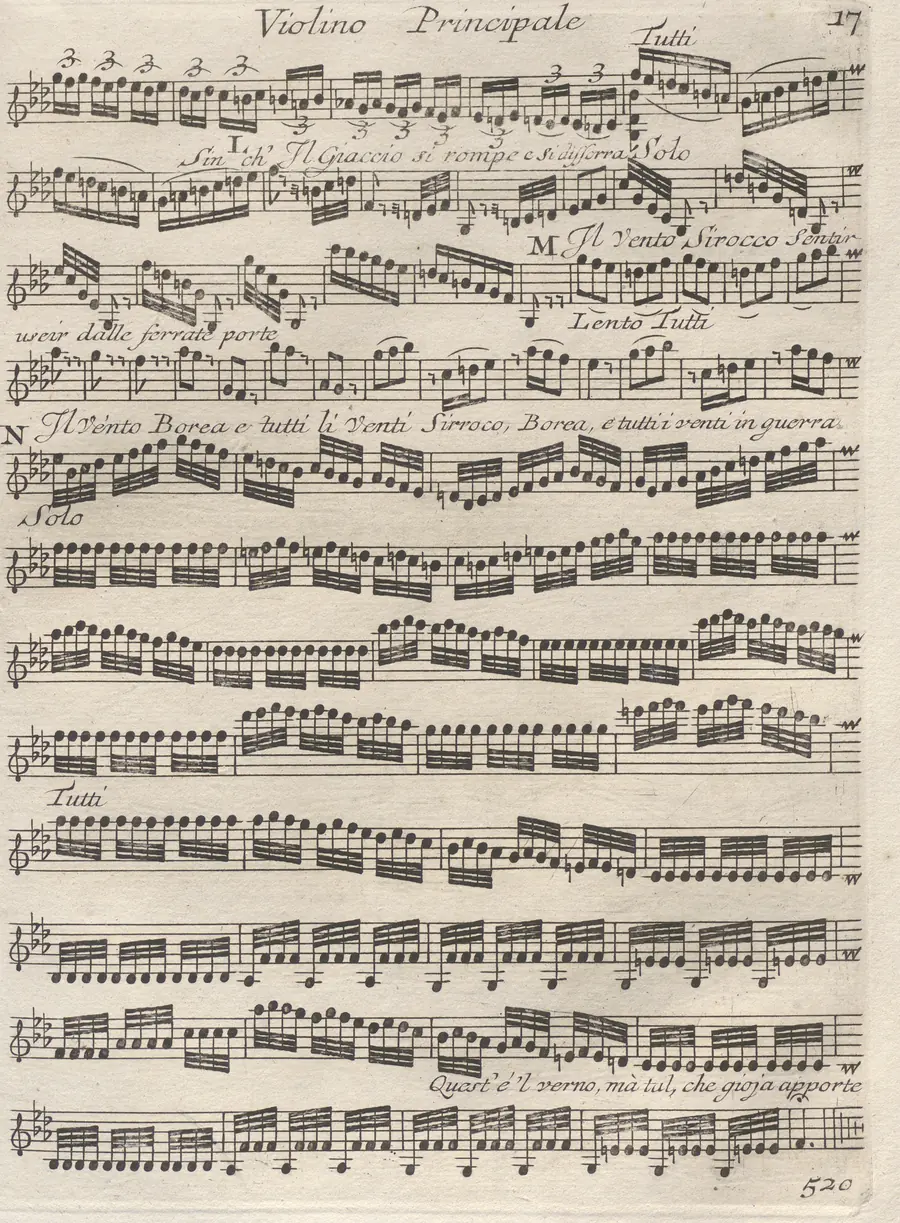
- Sin ch’il giaccio si rompe, e si disserra;until the ice cracks and breaks open;A stroke, a pause, a short quick motion - the ice cracks.
- Sentir uscir dalle ferrate porteto hear coming out through the iron-bound gatesSlow and warm - the sirocco, the warm south wind.In the score, over these bars: «Il Vento Sirocco»
- Sirocco, Borea, e tutti i Venti in guerra Quest’è ’l verno, mà tal, che gioja apporte.Sirocco, Boreas and all the winds at war. This is winter, but such as brings joy.The whole orchestra in the fastest notes - all the winds together.In the score, over these bars: «Il Vento Borea, e tutti li Venti»
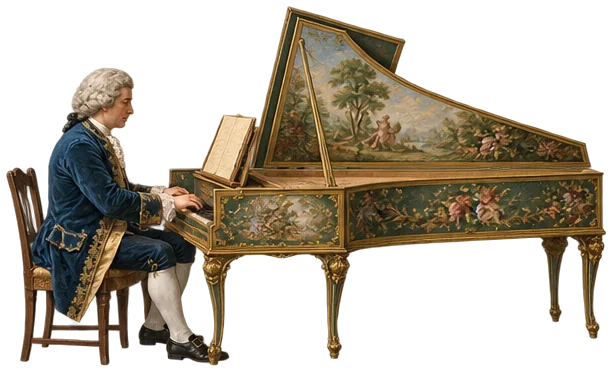
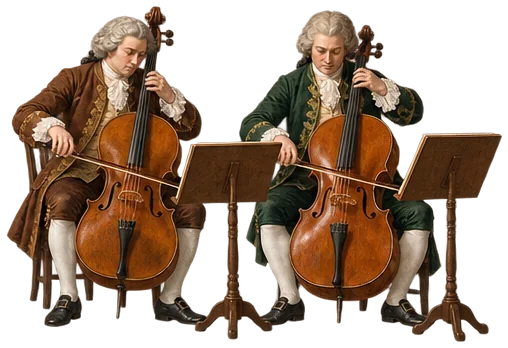
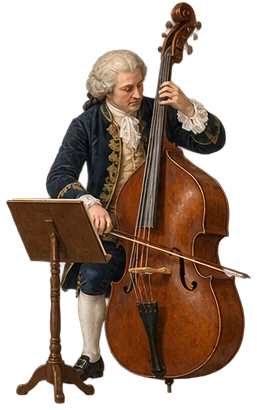
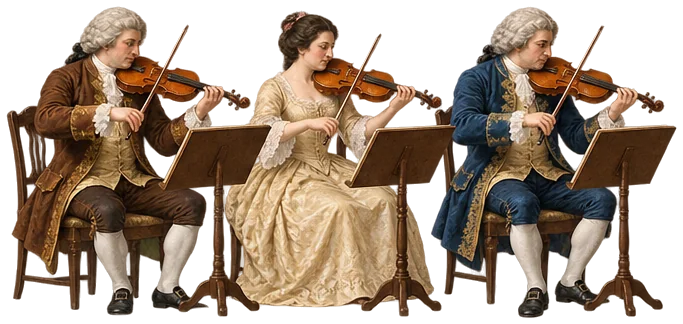
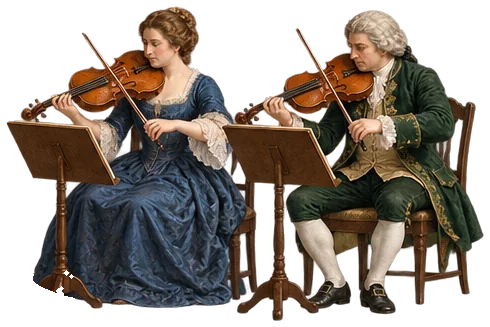
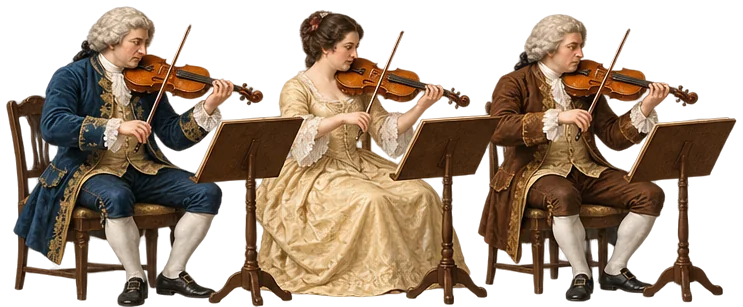
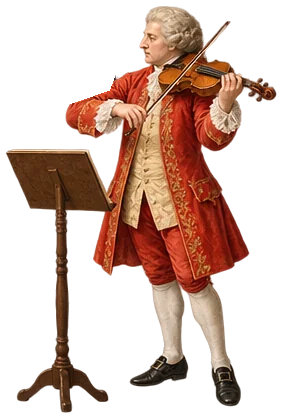
Press Play or the space bar: the players sounding at that moment will light up on the stage, and the sonnet line will appear here. While it is silent, tap any group to find out who they are.
The 1725 print: on the ice
The beginning of the third movement of Winter. Half a page has four letters: above almost every staff it says what the person on the ice is doing.
Tap an area on the page or an item in the list.
The 1725 print: the end of Winter
The last page of the Four Seasons in the soloist's part-book.
Tap an area on the page or an item in the list.
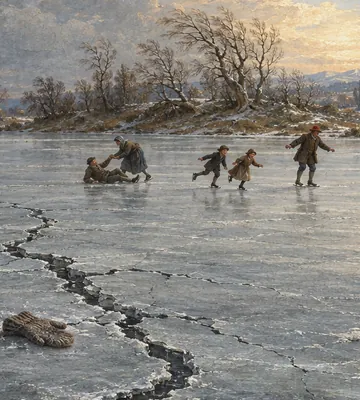
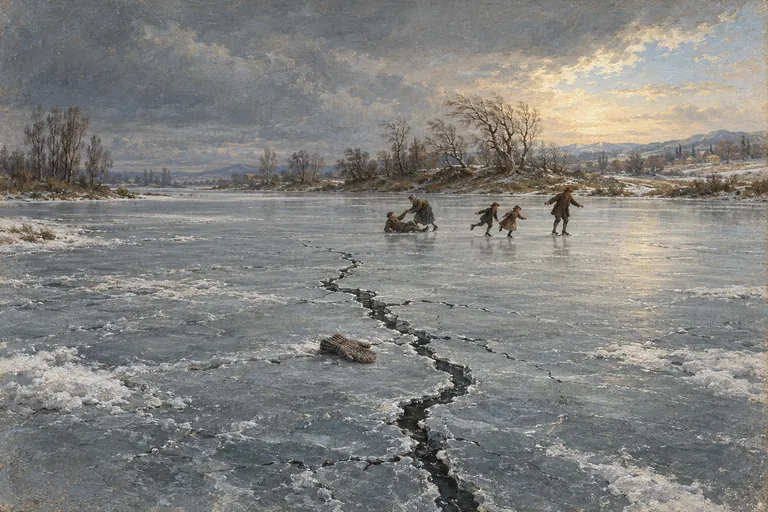
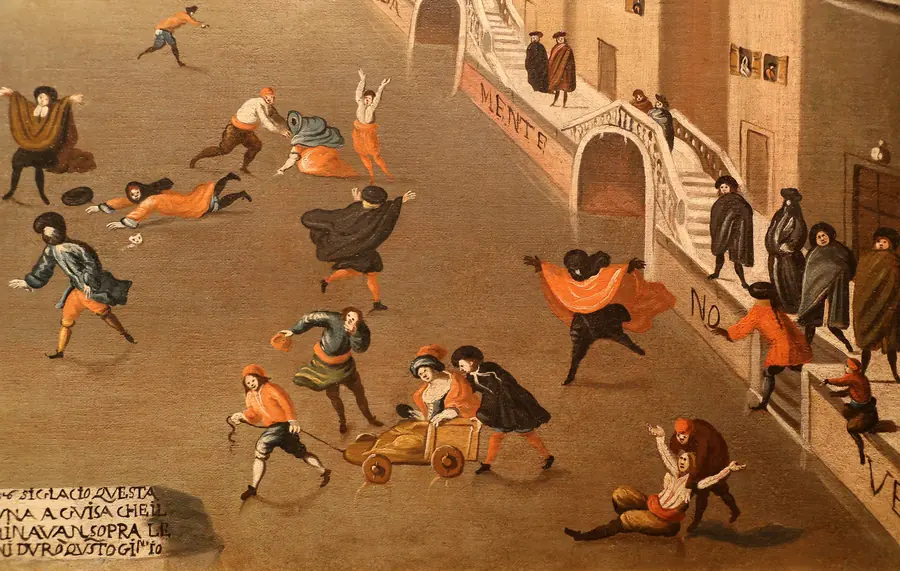
The frozen lagoon, about 1709
A detail of a painting by an unknown artist. In January 1709 the lagoon by the Fondamente Nove, a Venetian waterfront, froze over and people went out onto the ice. Vivaldi was thirty. The painting shows just what the sonnet describes: people walk carefully, slip, fall and run on.
Tap an area on the page or an item in the list.
About
The most events in a single movement: to walk on the ice, to slip, to fall, to run on, to hear the ice crack. Then a warm wind blows, and after it all the winds break loose together.
The sonnet ends with the words: "This is winter, but such as brings joy". The music ends with a storm. The joy here is not in the weather but in the person who goes out on the ice, falls, gets up and runs on.
Hear this
Places worth hearing on their own
0:01 – 0:13
On the ice
in the score Caminar sopra il giaccio
The soloist is almost alone. He repeats the same smooth six-note figure again and again, while the cellos beneath hold one note for twenty bars.
The same thing in another season
The sirocco is the heat of Summer
Vivaldi marked the warm wind with the same languid music with which Summer began.
The same thing in another season
Summer's storm and Winter's winds
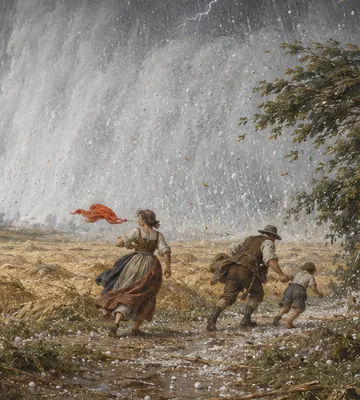
The last bars are written in the same very fast notes as the storm in Summer. There it destroyed the harvest.
Worth knowing
The Venetian lagoon really did freeze. On the night of 6 January 1709 a hard frost struck, ice covered the whole lagoon, and people walked across it. Vivaldi was thirty. A painting of that winter survives: in it passers-by slide and fall; a detail of it is in the Illustrations tab. Whether Vivaldi had that winter in mind we do not know: the lagoon froze again later.
The sirocco and Boreas are the two main winds of Venice. The sirocco is warm and damp and blows from the south-east; in winter it brings thaw and rain. Boreas is cold and dry and blows from the north-east.
The sonnet only says "to walk" and "to run" on the ice. Yet the scholar Paul Everett, who wrote a book on these concertos, hears skating here and calls the choice brilliant: skating, in his words, symbolises the freedom of people who are not afraid to take a risk.
In the first three seasons the characters are shepherds, peasants and hunters. In Winter there are none: people freeze outdoors, sit by the fire, walk on the ice. Paul Everett considers Winter the most urban of the four.
In 1761, twenty years after Vivaldi's death, the Venetian playwright Carlo Goldoni recalled him as a violinist famous for his works, "especially those entitled The Four Seasons". Of all Vivaldi's music, this is what his native city remembered best.
Conversation
What you heard
Share your impressions of what you heard, your feelings, or simply your thoughts out loud.
Only for the name under your comment. Your email is shown to no one.
Quiet here so far. Yours would be the first.