Summer I: lyrics and translation
The sonnet from the 1725 print, line by line, with a translation. The letters are the ones printed over the notes.
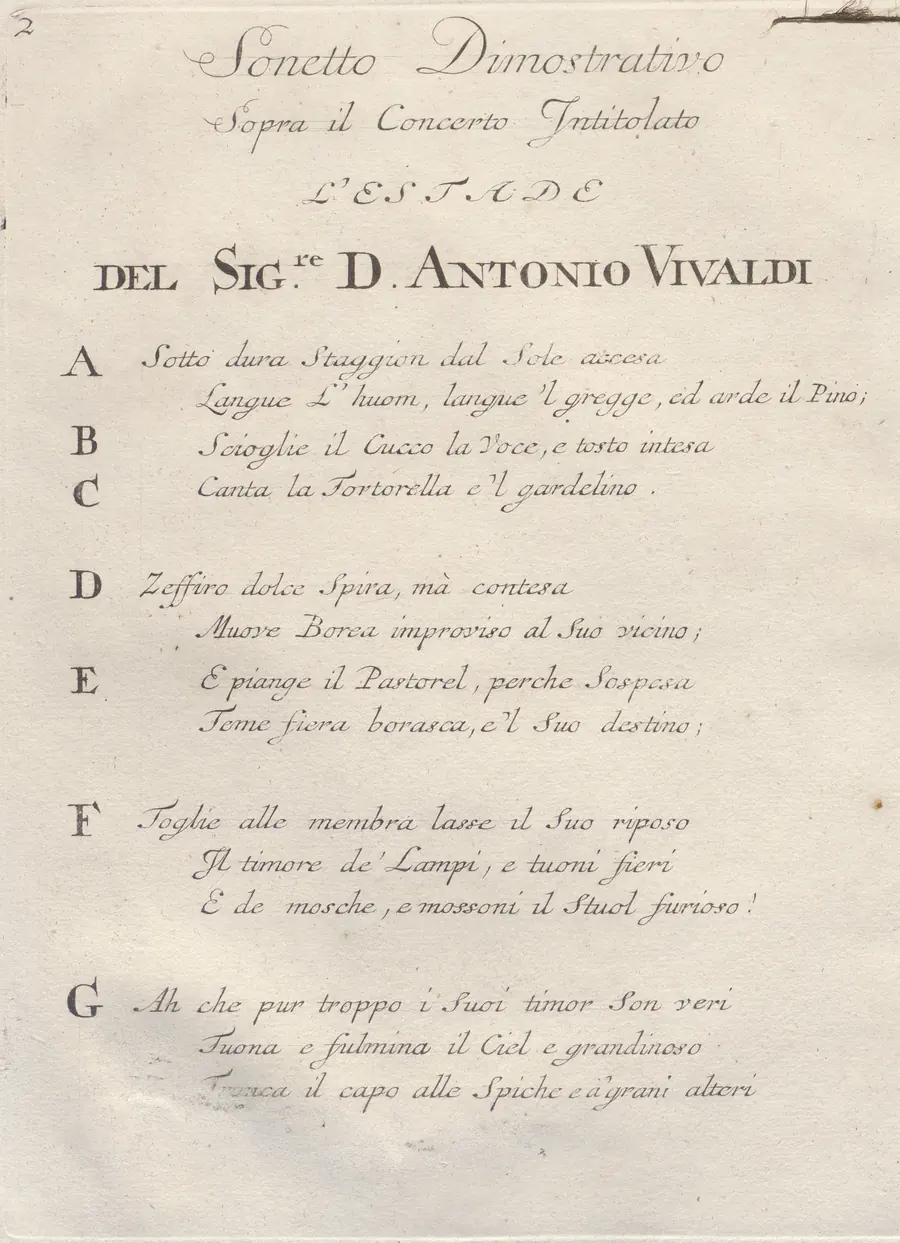
- Sotto dura Staggion dal Sole accesa Langue l’huom, langue ’l gregge, ed arde il Pino;In the hard season kindled by the sun man languishes, the flock languishes, and the pine burns;The orchestra, quietly, in fragments, with pauses: heat that leaves no strength to move.In the score, over these bars: «Languidezza per il caldo»
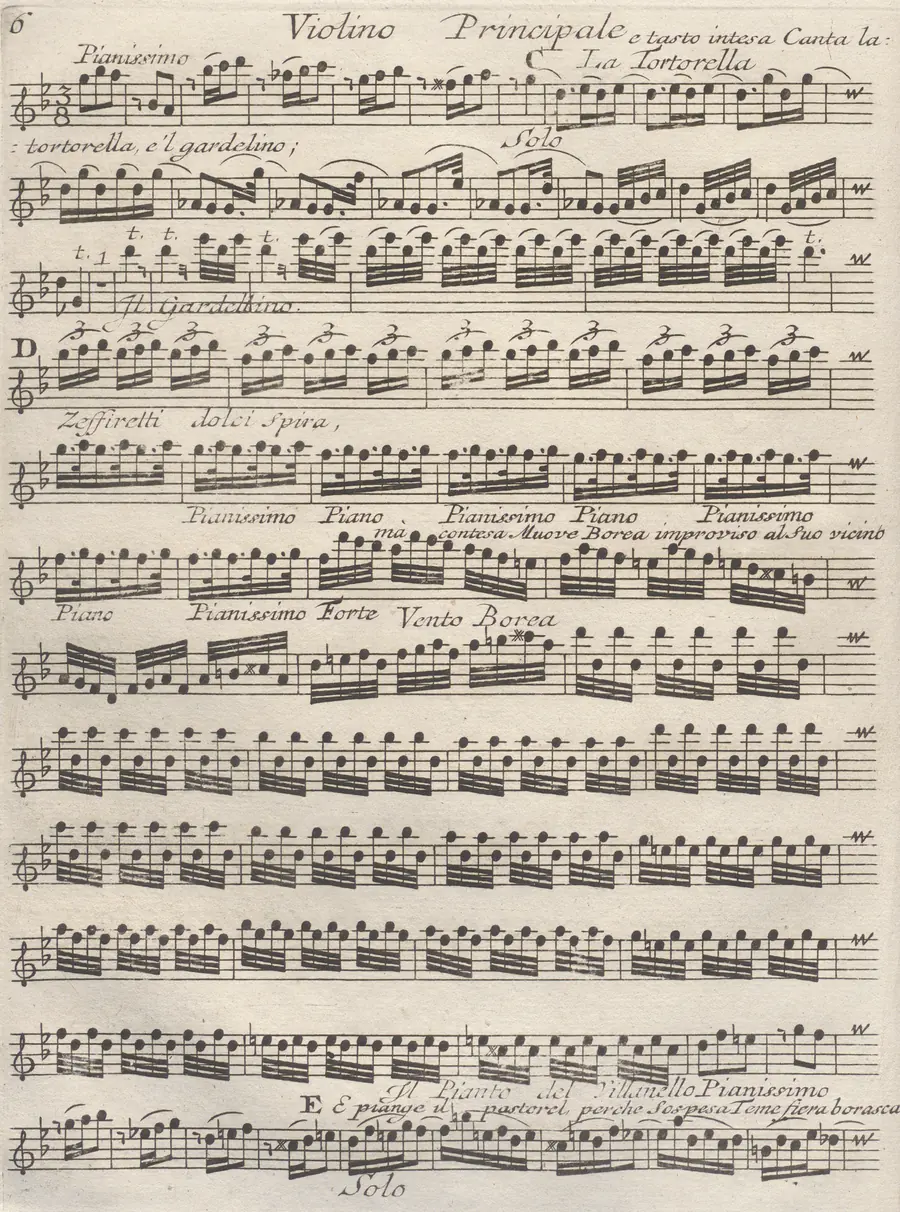
- Scioglie il Cucco la Voce, e tosto intesathe cuckoo lets out its voice, and at once, in answer,The soloist: an unbroken stream of fast notes. The cuckoo is the two lower notes in that stream.In the score, over these bars: «Il Cucco»
- Canta la Tortorella e ’l gardelino.the turtledove and the goldfinch sing.The soloist: the turtle dove - two neighbouring notes rocking; then the goldfinch - high trills.In the score, over these bars: «La Tortorella · Il Gardellino»
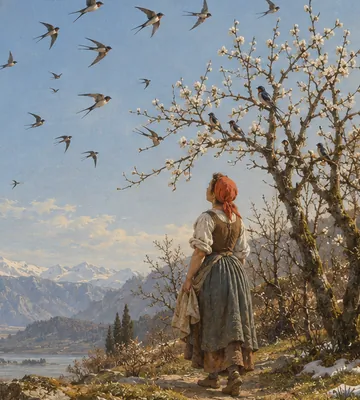
- Zeffiro dolce spira, mà contesa Muove Borea improviso al suo vicino;Sweet Zephyr breathes, but suddenly Boreas picks a quarrel with his neighbour;The violins, barely audible - the zephyr; then the whole orchestra, fast and loud - Boreas.In the score, over these bars: «Zeffiretti dolci · Vento Borea»
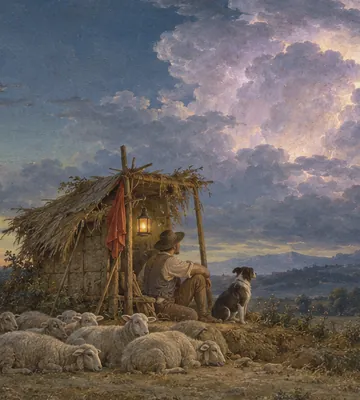
- E piange il Pastorel, perche sospesa Teme fiera borasca, e ’l suo destino;and the shepherd weeps, because he fears the fierce storm hanging over him, and his fate.The soloist almost alone, slow and quiet - the weeping; then the wind returns.In the score, over these bars: «Il Pianto del Villanello»
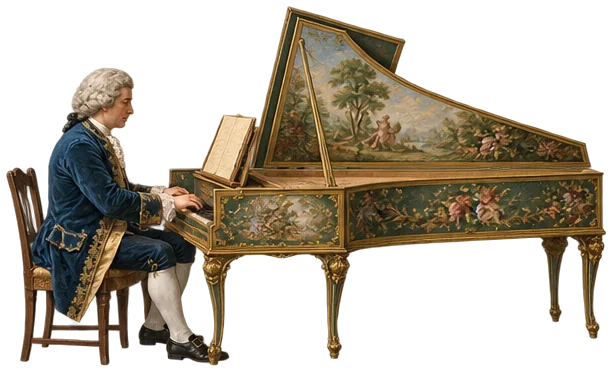
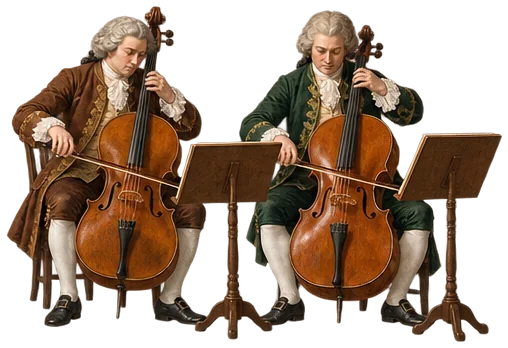
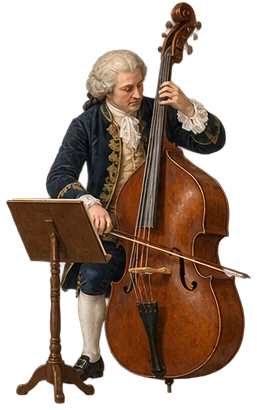
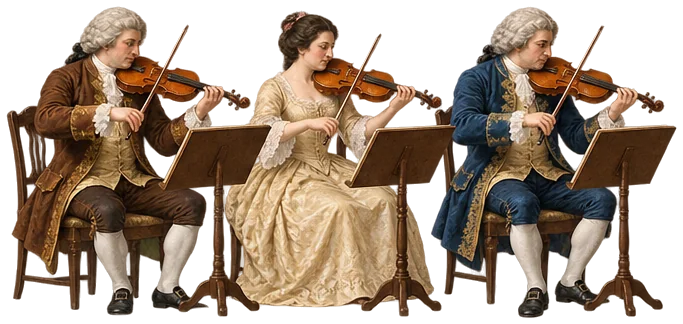
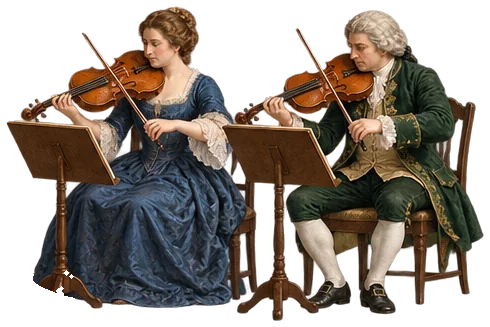
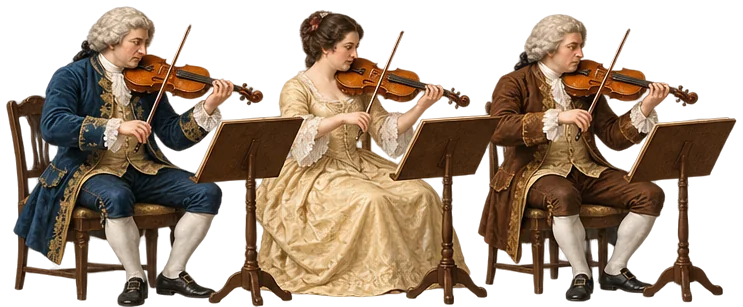
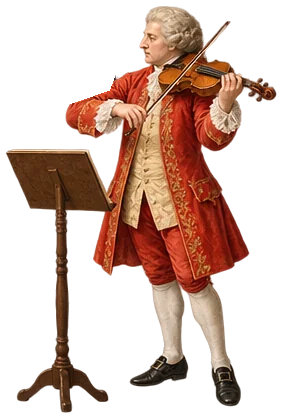
Press Play or the space bar: the players sounding at that moment will light up on the stage, and the sonnet line will appear here. While it is silent, tap any group to find out who they are.
The 1725 print: the opening of Summer
The middle of a page in the soloist's part-book: Spring ends here and the second concerto begins. Above the notes you can see both sonnet lines and instructions to the violinist.
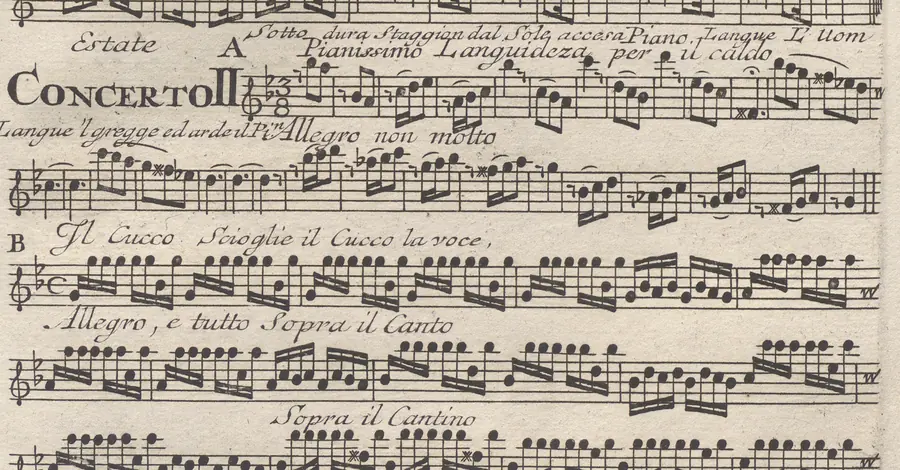
Tap an area on the page or an item in the list.
The 1725 print: birds, winds and weeping
The next page of the same movement. Each bird and each wind is labelled separately.
Tap an area on the page or an item in the list.
The “Summer” sonnet, printed before the music
Before the music, the soloist's part-book has four sonnets, one for each season. To the left of the lines stand capital letters. The same letters stand above the notes, so you can see which line the music belongs to.
Tap an area on the page or an item in the list.
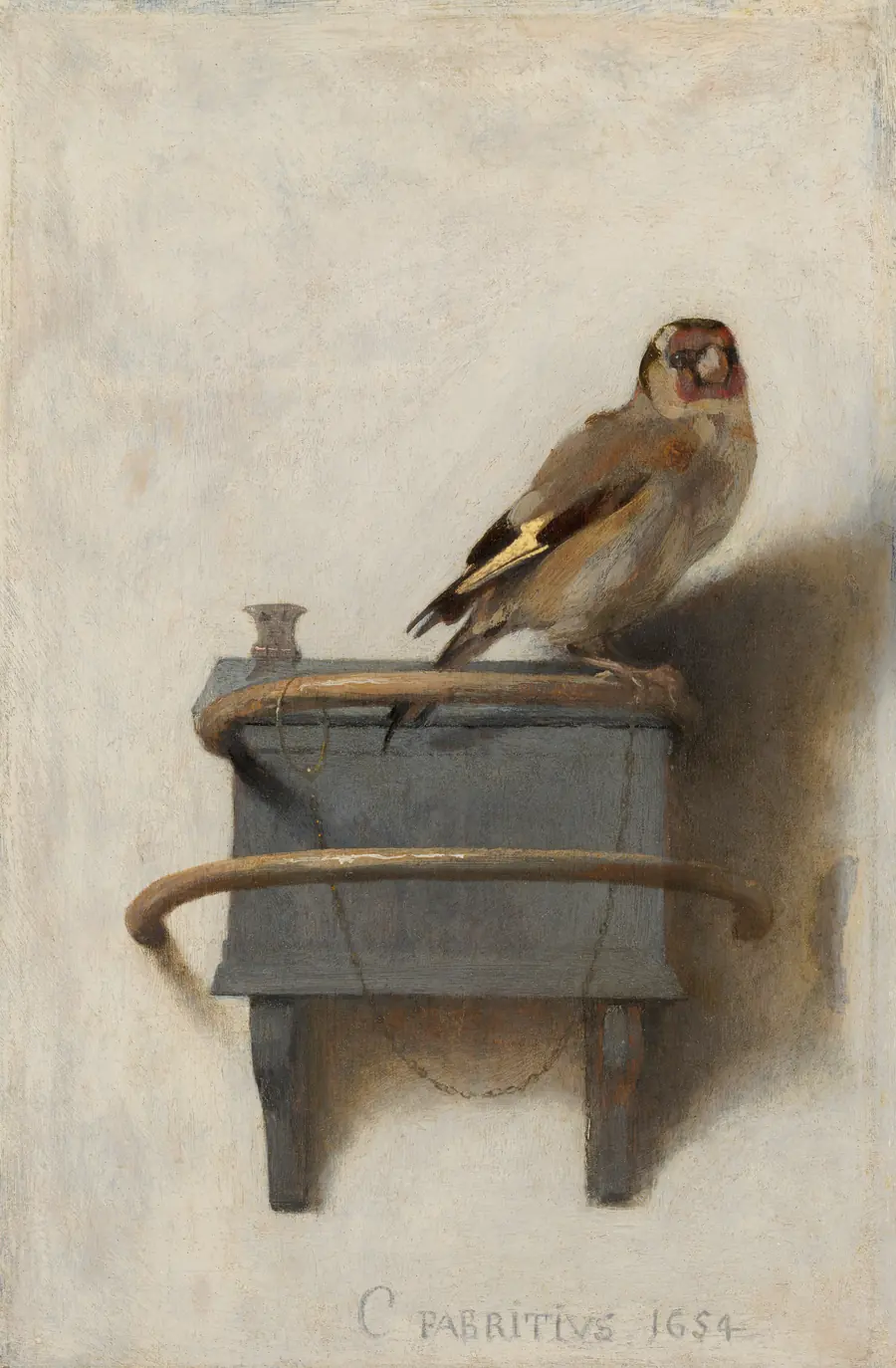
Carel Fabritius, The Goldfinch, 1654
Here is the bird Vivaldi labelled in the score: "Il Gardellino", the goldfinch. The Dutch painter Carel Fabritius made this picture in 1654, seventy years before The Four Seasons and far from Venice. We show it because it is the best-known goldfinch in painting, and the bird is easy to see.
Tap an area on the page or an item in the list.

About
The longest movement of the work: heat that leaves no strength to move, the voices of three birds, a light wind suddenly replaced by a cold northern one, and the weeping of a peasant who fears the storm.
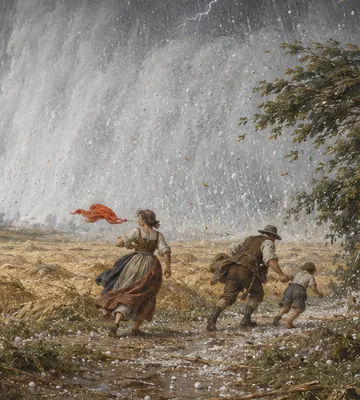
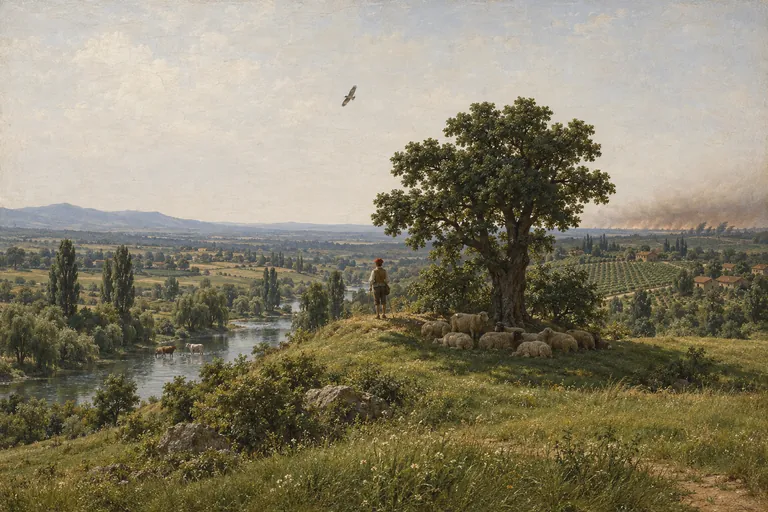
Vivaldi's summer is not a holiday. For a peasant it is the season when one storm can destroy the harvest, and all three movements of Summer lead to that storm: here it is feared, in the second movement it thunders in the distance, in the third it arrives. That is why Summer is the most anxious of the four concertos.
Hear this
Places worth hearing on their own
0:00 – 0:23
Heat
in the score Languidezza per il caldo
Quiet, with pauses, with no melody. Each short phrase starts late, as if there were no strength to move. Over this the score says: "languor from the heat".
The same thing in another season
This heat returns in winter
We hear this languid music of heat once more near the end of Winter. There it stands for the sirocco, the warm wind from the south.
Worth knowing
Boreas is not a poet's invention. In Venice it is the bora: a dry, cold wind from the north-east that arrives in gusts. In summer it is rare, which is why in the sonnet it comes "suddenly".
Vivaldi portrayed the goldfinch at least three times: here, on the violin, and in two concertos with flute that are simply called Il gardellino, The Goldfinch.
In Spring the birds have no names. Here the sonnet names three: the cuckoo, the turtle dove and the goldfinch. The turtle dove really is a summer voice: it arrives late in spring and is gone again by autumn.
The cuckoo here is more than a summer bird. The scholar Paul Everett, who wrote a book on these concertos, recalls an old belief: whoever hears the cuckoo before the nightingale will be unlucky in love. In Summer it is the cuckoo that sings first, and Everett hears in it a warning of disaster.
Paul Everett calls the peasant's lament one of the most radical creations in the music of its time. He also points to a word: the sonnet has "villanello", a diminutive, often translated as "shepherd boy". But the one who weeps is a grown man whose harvest the storm may take.
The goldfinch is one of the most frequent birds in Italian painting. The ornithologist Herbert Friedmann counted 486 pictures with one, by 254 artists, most of them Italian. Most often the bird is held by the infant Jesus.
Conversation
What you heard
Share your impressions of what you heard, your feelings, or simply your thoughts out loud.
Only for the name under your comment. Your email is shown to no one.
Quiet here so far. Yours would be the first.