
Spring I: lyrics and translation
The sonnet from the 1725 print, line by line, with a translation. The letters are the ones printed over the notes.
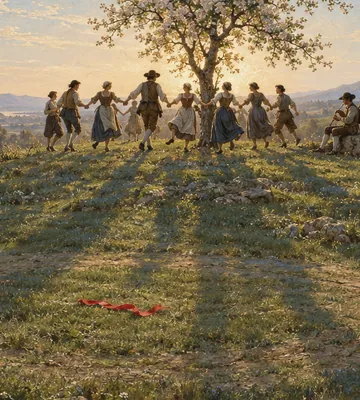
- Giunt’è la Primavera e festosettiSpring has come, and festivelyThe whole orchestra. The first melody is heard only here; the second, right after it, will come back as the refrain.In the score, over these bars: «ритурнель, увесь оркестр»
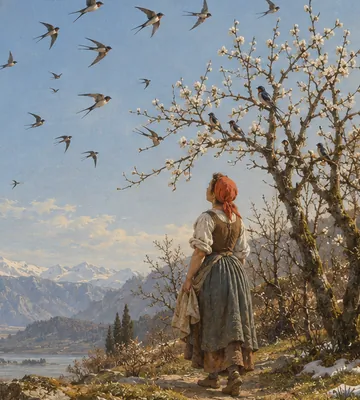
- La salutan gl’Augei con lieto canto,the birds greet it with glad song,The soloist and two violins from the orchestra: three birds calling to each other. Everyone else is silent.In the score, over these bars: «Canto de gl’Uccelli»
- E i fonti allo spirar de’ Zeffiretti Con dolce mormorio scorrono intanto:and the streams, under the breath of light breezes, meanwhile run on with a sweet murmur.The violins, quietly, in small waves: the stream.In the score, over these bars: «Scorrono i Fonti»
- Vengon’ coprendo l’aer di nero amanto E lampi, e tuoni ad annuntiarla eletti.Covering the air with a black cloak, lightning and thunder come, chosen to announce it.The orchestra repeats one note very fast - thunder; the soloist's quick runs upward - lightning.In the score, over these bars: «Tuoni»
- Indi tacendo questi, gl’Augelletti Tornan’ di nuovo al lor canoro incanto:Then, when they fall silent, the little birds return once more to their enchanting song.The birds return, but they sound sadder now than before the storm.In the score, over these bars: «Canto d’Uccelli»
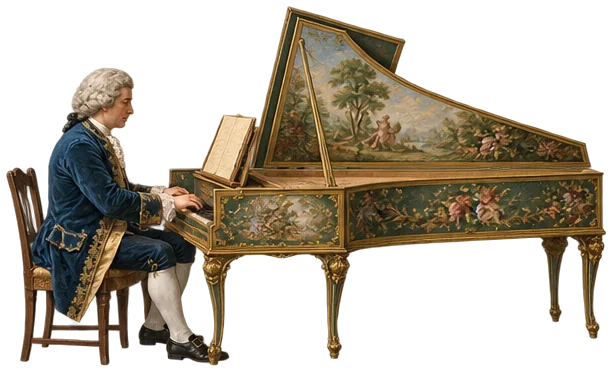
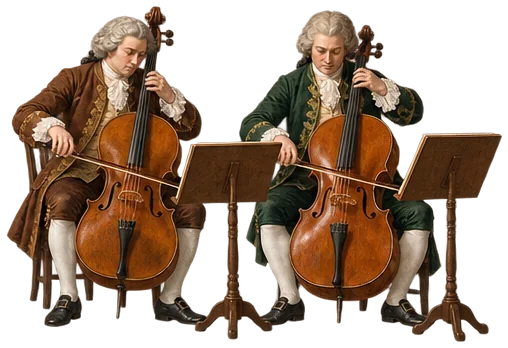
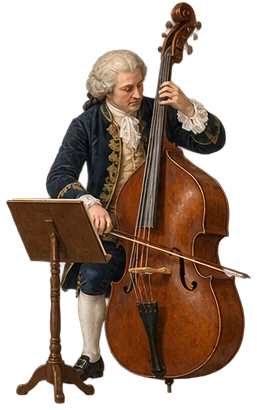
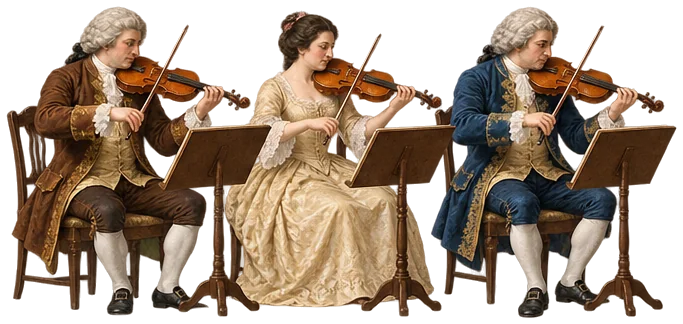
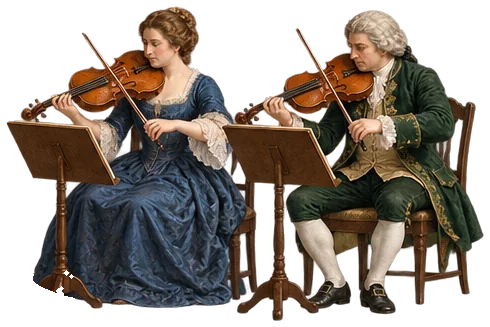
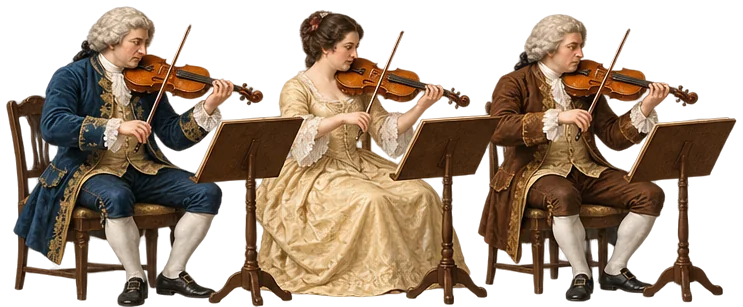
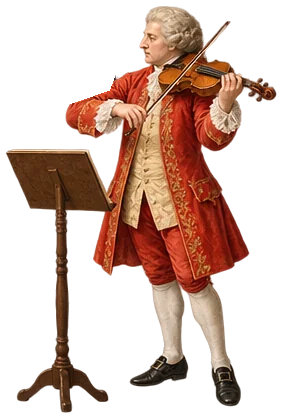
Press Play or the space bar: the players sounding at that moment will light up on the stage, and the sonnet line will appear here. While it is silent, tap any group to find out who they are.
The 1725 print: the opening of Spring
No manuscript in Vivaldi's hand survives. The earliest source we have is the first edition, printed in Amsterdam in 1725. This is a page from the soloist's part-book: letters and lines of the sonnet stand above the notes, so the violinist could see what he was depicting at each moment.
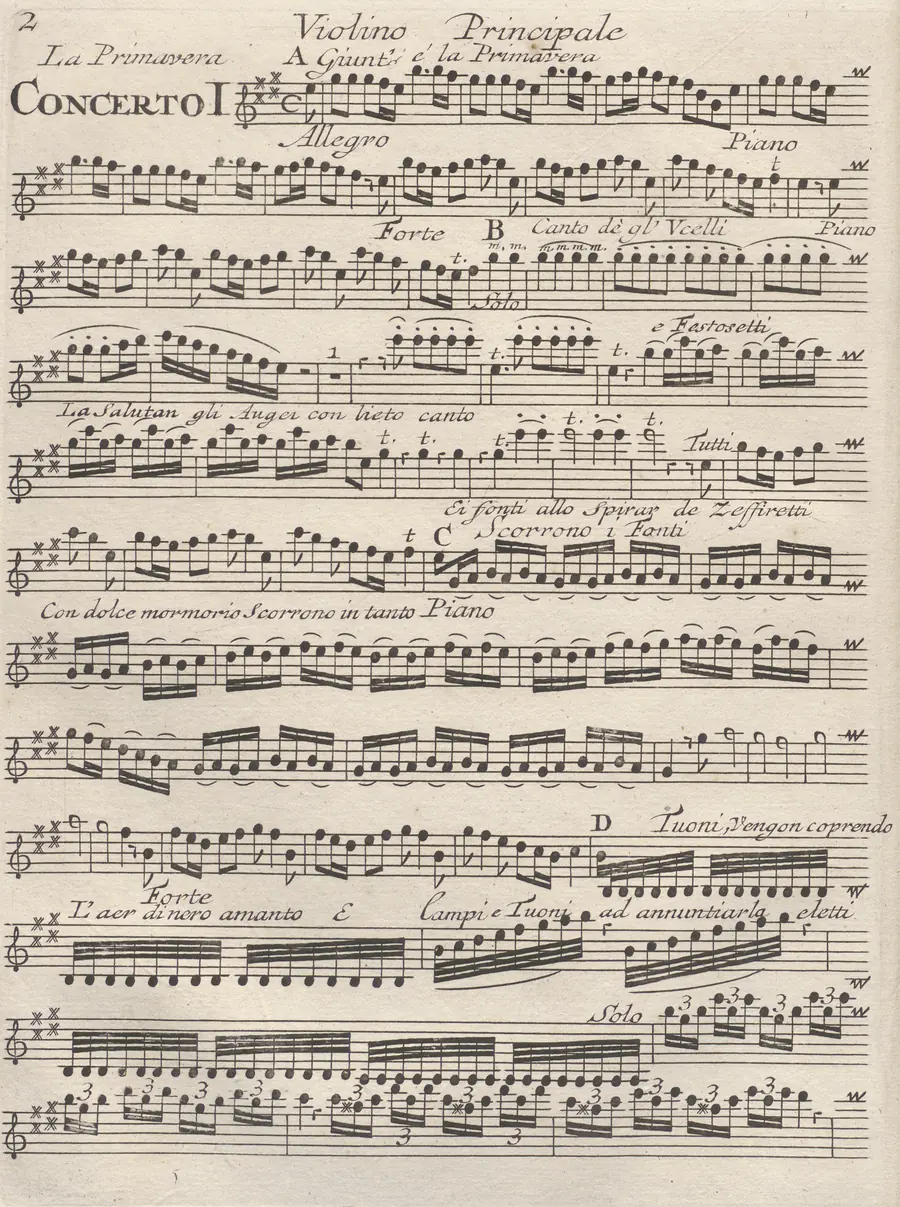
Tap an area on the page or an item in the list.
The “Spring” sonnet, printed before the music
Before the music, the soloist's part-book has four sonnets, one for each season. To the left of the lines stand capital letters. The same letters stand above the notes, so you can see which line the music belongs to.
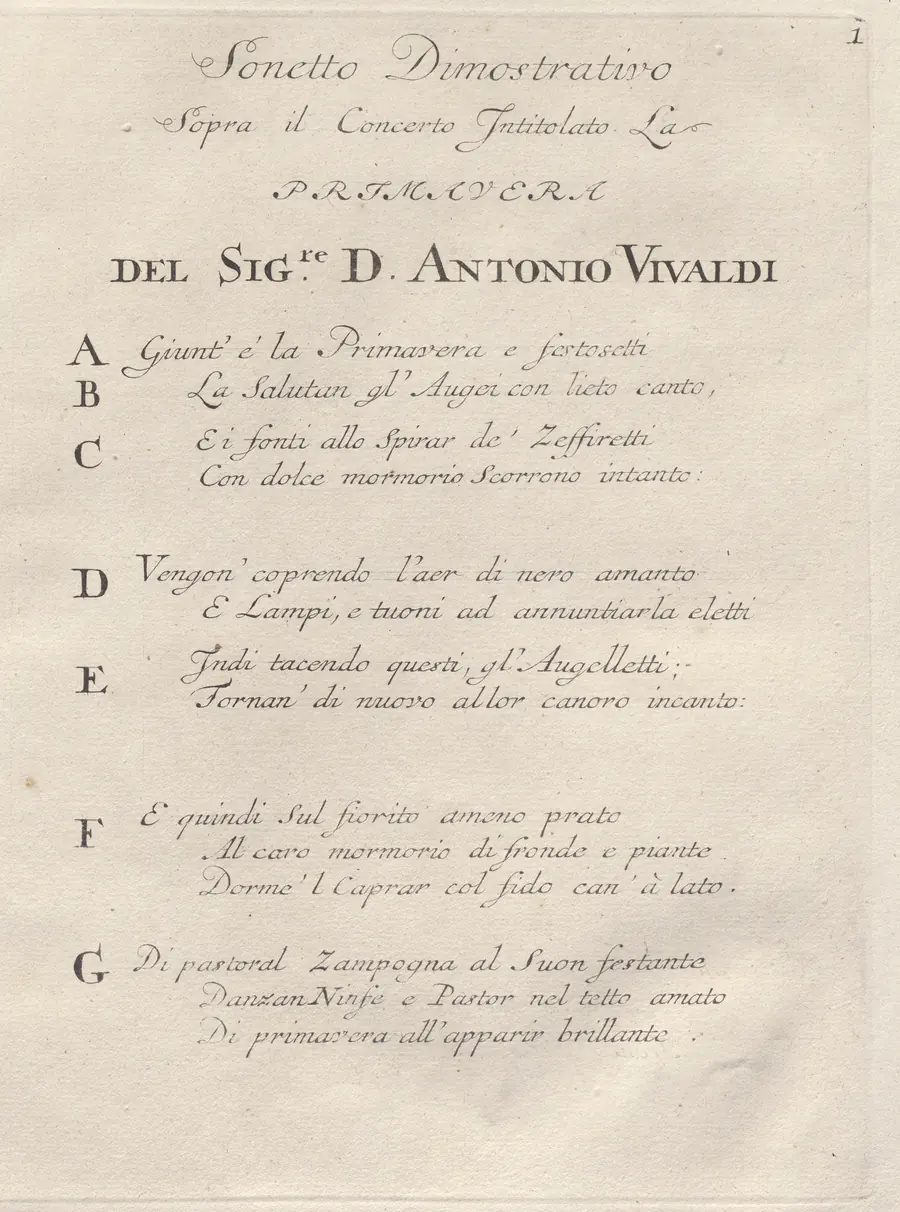
Tap an area on the page or an item in the list.
Map of Venice, 1729
This is Venice as it looked in Vivaldi's lifetime. Lodovico Ughi drew the map, and it was printed in 1729, four years after the score of The Four Seasons. It is considered the first map of the city based on measurements made on the spot. This is not a page of music: it shows where Vivaldi lived and where he worked. Zoom in to read the names.
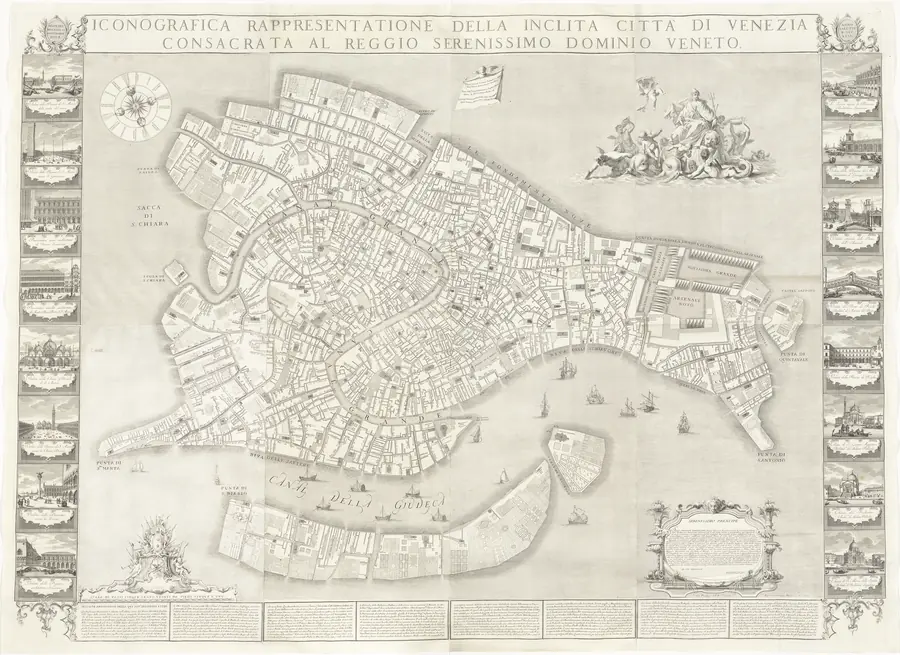
Tap an area on the page or an item in the list.
_for_the_views,_Iconografica_Rappresentatione_della_Inclita_Citt%C3%A0_di_Venezia,_1729,_NGA_151050.jpg)
About
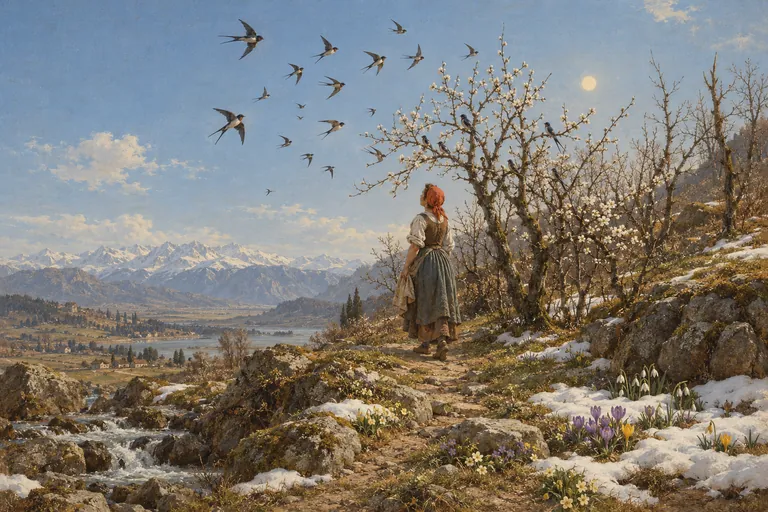
Spring begins with a melody played by the whole orchestra. Then the events of the sonnet follow one by one: birds, a stream, a short storm, and birds again.
The fast movements of The Four Seasons are built like a song with a refrain. The whole orchestra plays the refrain, and between its returns the soloist and a few players show what the sonnet line is about. This is where that design is easiest to hear, so it is worth remembering from the first movement.
Hear this
Places worth hearing on their own
0:00 – 0:16
The opening everyone knows
You have most likely heard this melody many times. In the movement itself it is played only here, at the start: first loudly, then more quietly. It does not come back.
The same thing in another season
Autumn begins the same way
The opening of Autumn follows the same pattern: a short melody for the whole orchestra, loud and then at once quieter. In spring the birds celebrate, in autumn the peasants.
Worth knowing
On 25 November 1730 Louis XV of France asked to hear Spring. The royal musicians were not at that concert, so the violinist Jean-Pierre Guignon was accompanied by a prince, a count and several other courtiers. Spring had by then been played in Paris for more than two years, and it stayed on programmes for decades.
Vivaldi used the melody that opens Spring again in his opera Giustino (Rome, 1724). There it is heard as the goddess Fortune descends from the sky in bright light. For Vivaldi himself this was music for a grand entrance.
In 1775 Spring was arranged for a single flute, with no accompaniment at all, by Jean-Jacques Rousseau - the philosopher, who earned his living by copying music. Fifty years after the first print, this music was still being published and played in Paris.
In the 1760s the Paris composer Michel Corrette turned Spring into a work for choir and orchestra. To Vivaldi's music the choir sings the psalm that begins "Praise ye the Lord from the heavens". So a concerto about spring became a work on words from the Bible.
There are four storms in The Four Seasons, and this is the only one that passes quickly. The rest are in Summer: in the first movement people fear it, in the second thunder is heard far off, in the third the storm arrives.
The violinist Daniel Hope on the opening of this movement: "When 'Spring' starts, you have that first entry with the violins passing birdsong between each other. The fact that a violin was able to sing like a bird, that was probably the first thing that astonished me."
In Hamburg in 2019 an orchestra played The Four Seasons altered according to climate data. The birdsong passage of Spring had fifteen per cent fewer notes: roughly the share of bird species that, by the authors' reckoning, has disappeared since Vivaldi's time.
Conversation
What you heard
Share your impressions of what you heard, your feelings, or simply your thoughts out loud.
Only for the name under your comment. Your email is shown to no one.
Quiet here so far. Yours would be the first.