The path of the work
Three hundred years on the road
The music was printed in Amsterdam, played in Paris, forgotten for a century and a half and rediscovered in Turin. Let us follow this path on the map, stop by stop.
1 / 19
around 1720
Venice or Mantua
When and where The Four Seasons were written is not known: in Venice or in Mantua, where Vivaldi was then in service. In 1725 he will write that Count Morzin has known these concertos "for so long".
The whole path as a list
- around 1720Venice or Mantua
When and where The Four Seasons were written is not known: in Venice or in Mantua, where Vivaldi was then in service. In 1725 he will write that Count Morzin has known these concertos "for so long".
- 1720sPrague
Count Wenzel von Morzin keeps his own orchestra in Prague and pays Vivaldi every year for new concertos. It is to him that Vivaldi will dedicate the collection containing The Four Seasons, praising his "most virtuoso orchestra" in the dedication.
- 1725Amsterdam
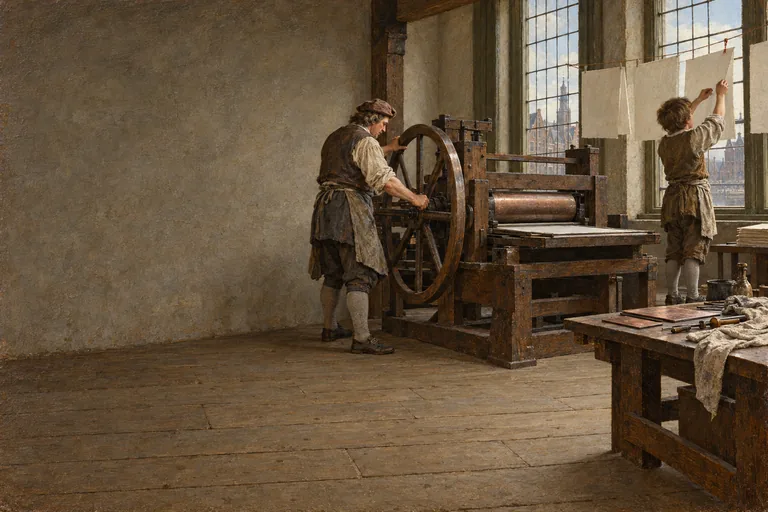
The publisher Michel-Charles Le Cène prints a collection of twelve concertos; The Four Seasons are the first four. The sonnets are printed together with the music, and their lines stand right over the bars. The collection costs 12 guilders - Vivaldi's most expensive publication.
- 1728Paris
On 7 February The Four Seasons are heard in Paris for the first time. Spring will be played there for at least another quarter of a century.
- 1730Marly, France
King Louis XV asks to hear Spring. The royal musicians are not at hand, so the violinist is accompanied by a prince, a count and several courtiers.
- 1739Paris
Nicolas Chédeville, who teaches the king's daughters the bagpipe, arranges Spring for bagpipe. In 1775 the philosopher Jean-Jacques Rousseau will arrange it for a single flute.
- 1741Vienna
Vivaldi dies in Vienna, where he had come to stage operas. In Venice his music has by then gone out of fashion.
- 1776London
The music historian John Hawkins writes that the plan of retelling sonnets in notes "must appear very ridiculous", and in the same breath admits: this is the most applauded of Vivaldi's works.
- 19th century
Vivaldi's music is hardly played. He is remembered as the author of concertos that Johann Sebastian Bach once arranged for organ and harpsichord.
- 1926Turin
A church school in Piedmont wants to sell old music to pay for repairs. Professor Alberto Gentili opens the crates and finds volumes of Vivaldi manuscripts. Within four years the Turin library gathers twenty-seven volumes. The Four Seasons are not among them, but the world learns anew who Vivaldi was.
- 1939Siena
A Vivaldi Week: in six days his sacred works and an opera are heard, unperformed since the composer's time. Two weeks earlier the Second World War had begun.
- 1942Rome
The conductor Bernardino Molinari makes the first recording of The Four Seasons: a large orchestra, six discs, forty-four minutes.
- 1947New York
The violinist Louis Kaufman records The Four Seasons in Carnegie Hall at night, in the last days of December: from 1 January the musicians' union bans recording. In 1950 this record wins the French Grand Prix du Disque.
- 1955Rome
The Rome ensemble I Musici - twelve musicians without a conductor - records The Four Seasons the way they will be played for the next twenty years.
- 1977Vienna
A Viennese ensemble under Nikolaus Harnoncourt records the work on instruments of Vivaldi's time: gut strings, lighter bows, twelve musicians. The sound is dry and sharp, and a new fashion starts with this recording.
- 1989London
The recording by the violinist Nigel Kennedy climbs to third place in the British album chart, among pop records, and tops the classical chart for more than a year.
- 2012London
The composer Max Richter writes Recomposed: he takes about a quarter of Vivaldi's notes and builds a new work from them. He explained that he wanted to fall in love again with music one hears everywhere.
- 2019Hamburg
An orchestra plays For Seasons: the notes are altered according to climate data. The bird motif has fifteen per cent fewer notes - that, the authors say, is how many bird species have disappeared since Vivaldi's time.
- 2025
Three hundred years since publication. By the count of Bachtrack, a site that keeps track of concerts, The Four Seasons was the most performed work of the year.