Autumn III: lyrics and translation
The sonnet from the 1725 print, line by line, with a translation. The letters are the ones printed over the notes.
- I cacciator alla nov’alba à caccia Con corni, Schioppi, e canni escono fuoreAt the new dawn the hunters go out to the hunt with horns, guns and dogs.The whole orchestra - the hunters set out at dawn.In the score, over these bars: «La Caccia»
- Fugge la belva, e seguono la traccia;The beast flees, and they follow its track;The soloist in triplets - the beast flees.In the score, over these bars: «La Fiera che fugge»
- Già sbigottita, e lassa al gran rumore De’ Schioppi e canni, ferita minacciaalready bewildered and worn out by the great noise of guns and dogs, wounded, it still threatens,Volleys of very fast notes in the orchestra - guns and dogs.In the score, over these bars: «Schioppi, e Cani»
- Languida di fuggir, mà oppressa muore.too weak to flee, but, overcome, it dies.The soloist, shorter and lower each time - the beast is exhausted.In the score, over these bars: «La Fiera fuggendo muore»
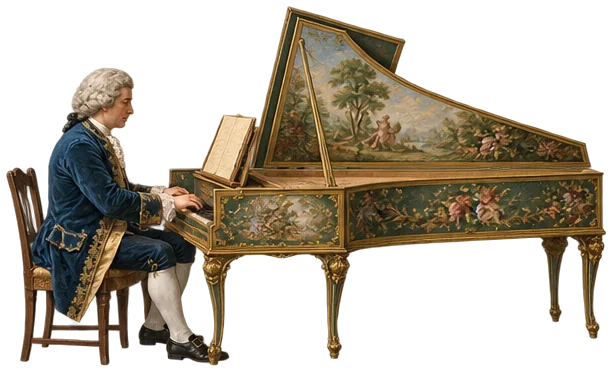
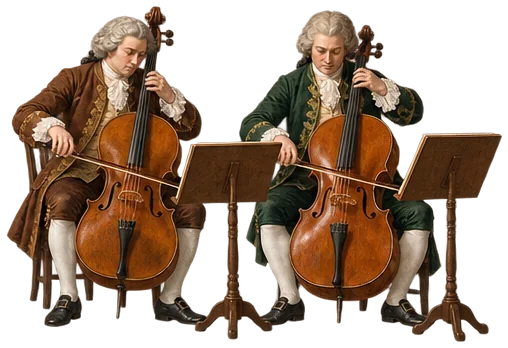
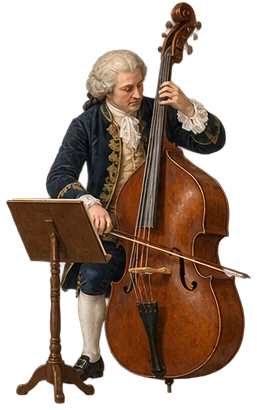
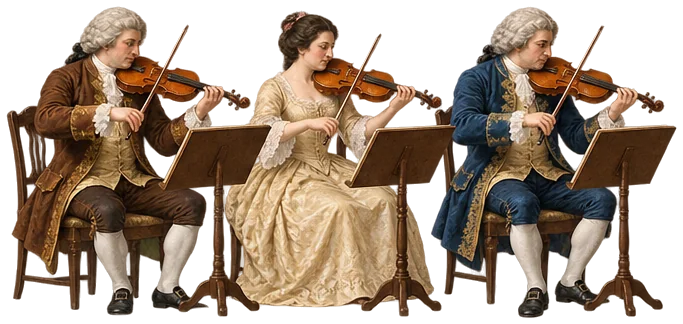
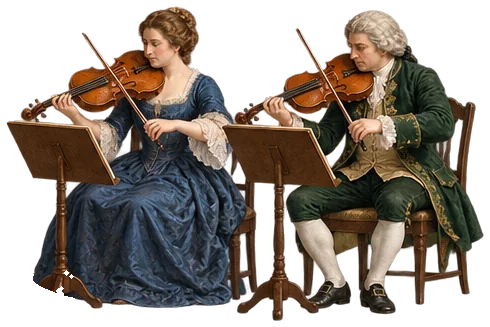
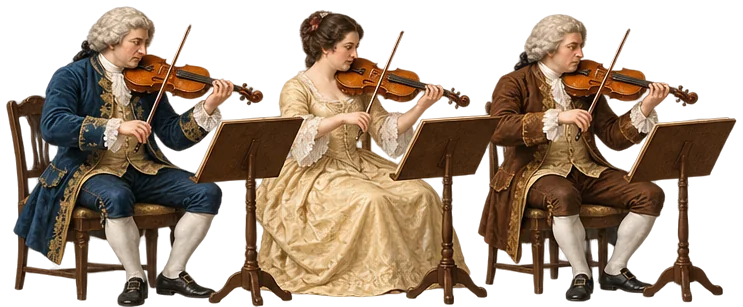
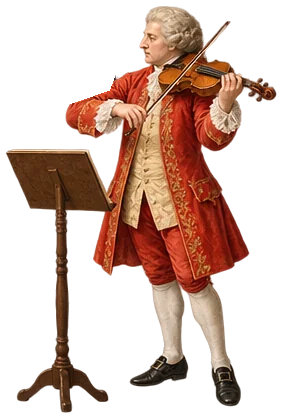
Press Play or the space bar: the players sounding at that moment will light up on the stage, and the sonnet line will appear here. While it is silent, tap any group to find out who they are.
The 1725 print: the hunt
The third movement of Autumn in the soloist's part-book. It begins in the middle of a staff, right after the slow movement.
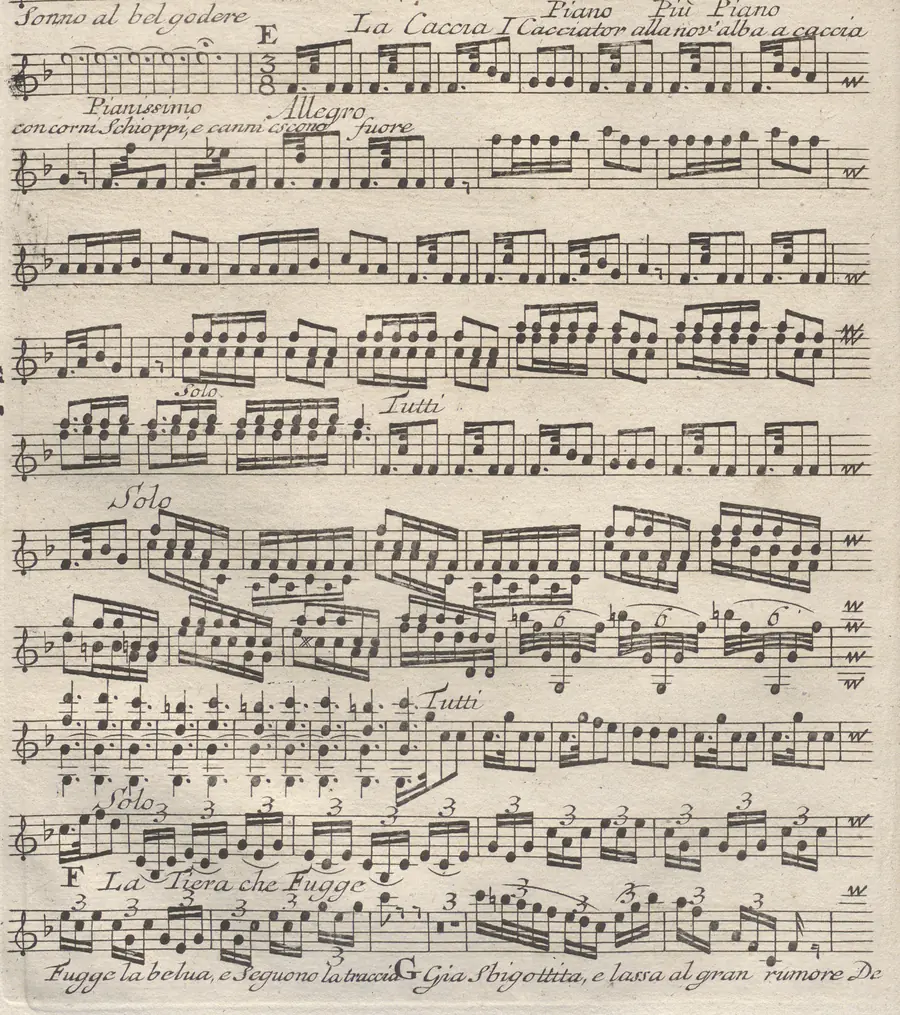
Tap an area on the page or an item in the list.
The 1725 print: the end of the hunt
The last staves of Autumn in the soloist's part-book.
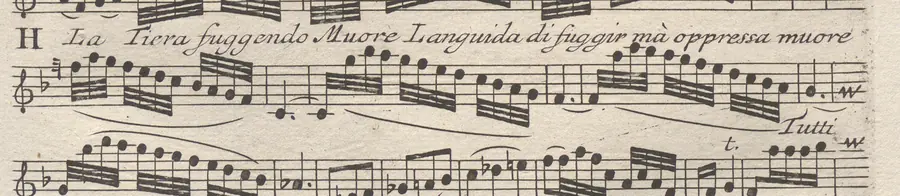
Tap an area on the page or an item in the list.
Pietro Longhi, The Hare Hunt
The Venetian painter Pietro Longhi made this picture around 1755-1760, three decades after The Four Seasons. It shows what the sonnet lists: guns and dogs. The sonnet does not say who is hunting in Vivaldi; in Longhi it is gentlefolk with their servants.
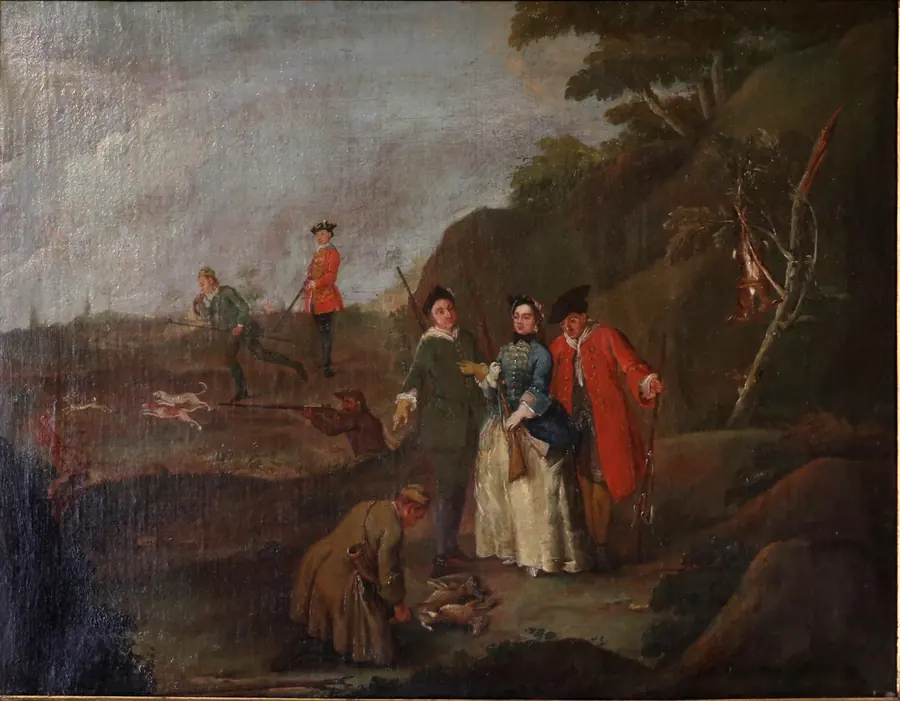
Tap an area on the page or an item in the list.

About
A hunt at dawn: hunters with horns, guns and dogs chase a beast until it falls.
The soloist plays both sides here. First he is the hunting horn, then the fleeing beast. At the end the hunters' cheerful melody returns: for them it has been a good morning.
Hear this
Places worth hearing on their own
0:01 – 0:20
Setting out
in the score La caccia
A melody for the whole orchestra: the hunters go out at dawn.
Worth knowing
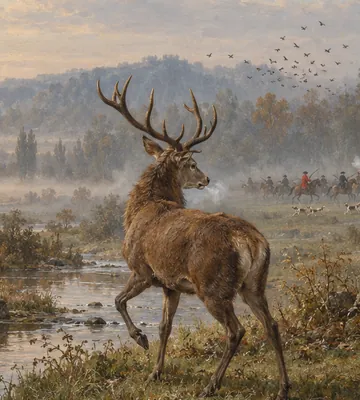
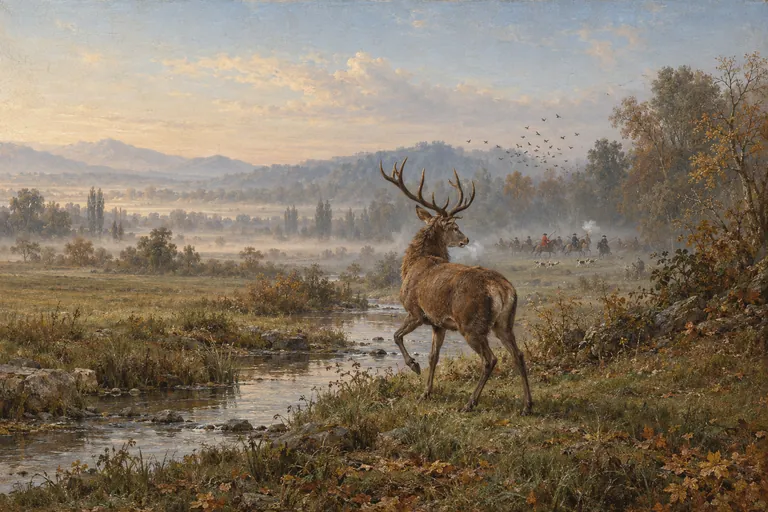
The sonnet does not say what is being hunted: it only says "la fiera", a wild beast. The stag often mentioned in concert programmes is not in the text.
The collection in which The Four Seasons was printed contains one more concerto about hunting, La caccia. It has the same horn calls and the same triplets.
Vivaldi dedicated the collection that includes The Four Seasons to the Bohemian count Wenzel von Morzin. The count kept his own orchestra in Prague, and its two horn players wore the livery of footmen. The scholar Václav Kapsa takes the hunting music in the collection as a sign that Vivaldi knew the count's tastes.
In the first movement it was peasants who were celebrating. A hunt with horns, guns and dogs was a pastime of the gentry. The sonnet does not say who the hunters are, but scholars hear a change of company here: skill in place of village roughness.
James Jacobs, a presenter on American classical radio, suggests noticing how the violin in The Four Seasons keeps changing characters: "One moment he might be a sleeping shepherd, in the next moment he's this beast."
Conversation
What you heard
Share your impressions of what you heard, your feelings, or simply your thoughts out loud.
Only for the name under your comment. Your email is shown to no one.
Quiet here so far. Yours would be the first.