Winter I: lyrics and translation
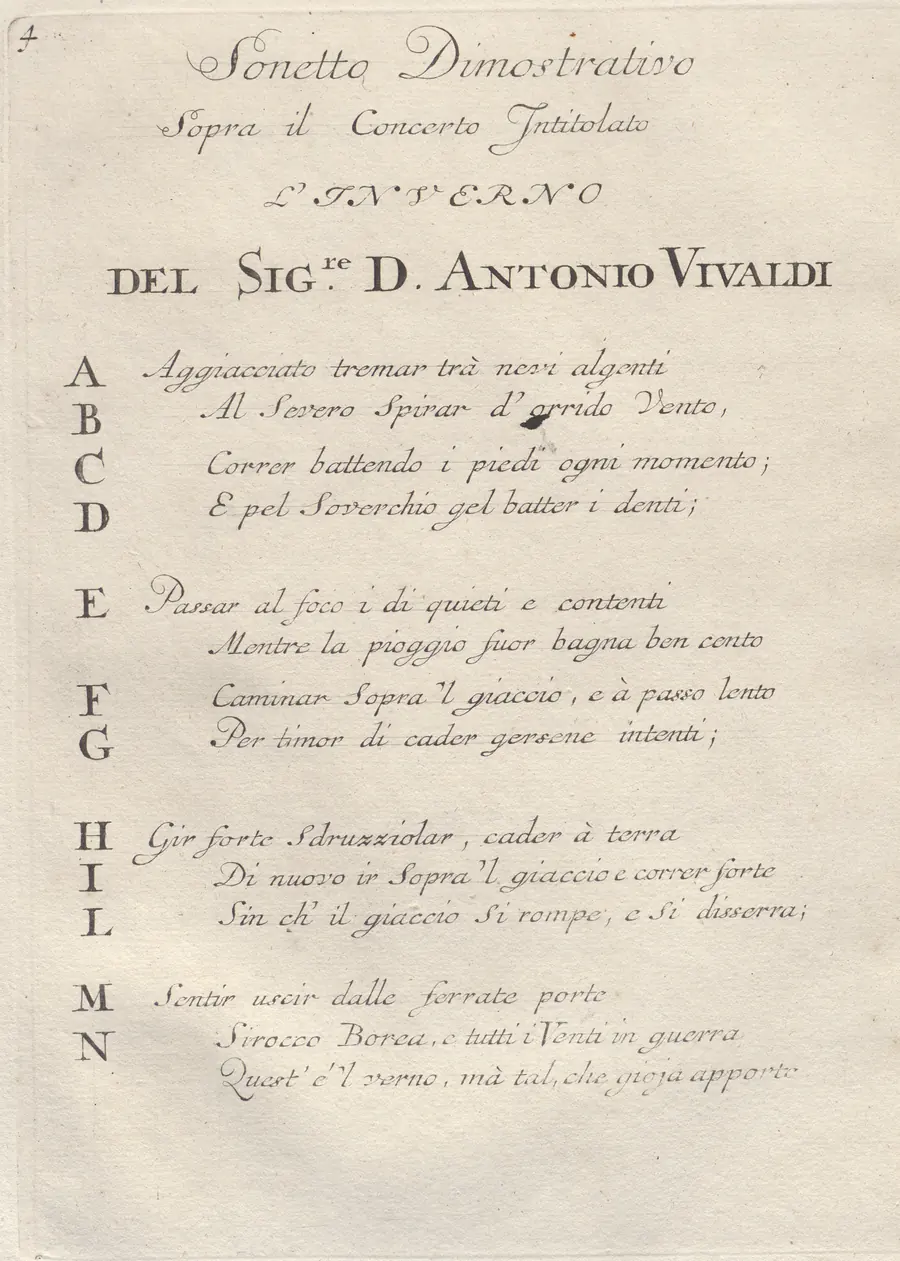
The sonnet from the 1725 print, line by line, with a translation. The letters are the ones printed over the notes.
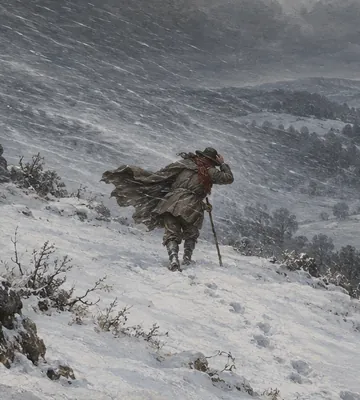
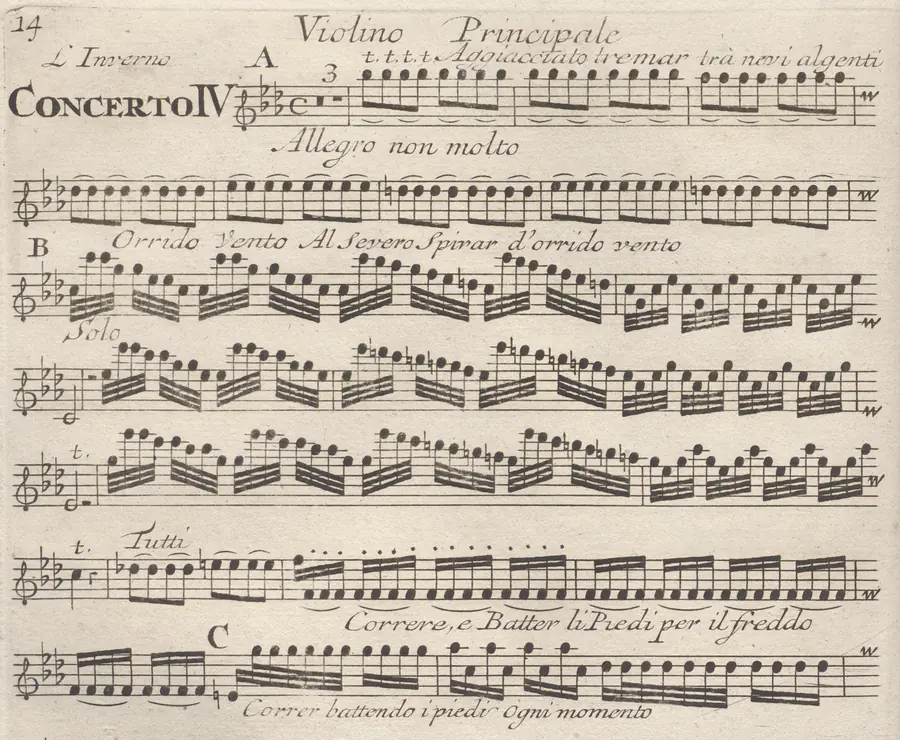
- Aggiacciato tremar trà nevi algentiTo tremble, frozen, amid the icy snowsThe orchestra repeats short notes, the instruments join one by one - shivering.
- Al severo spirar d’orrido Vento,in the harsh breath of a horrid wind,The soloist alone, a whirl of very fast notes - the wind.In the score, over these bars: «Orrido Vento»
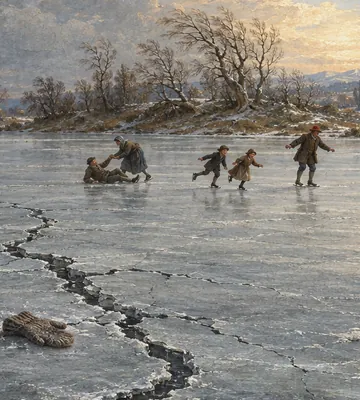
- Correr battendo i piedi ogni momento;to run, stamping one's feet every moment,The whole orchestra, fast and even - running and stamping of feet.In the score, over these bars: «Correre, e batter li piedi per il freddo»
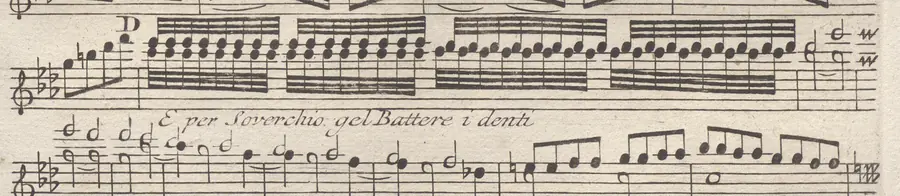
- E pel soverchio gel batter i denti;and to chatter one's teeth from the excessive cold;The soloist, fast strokes on two strings - chattering teeth.In the score, over these bars: «Batter li denti»
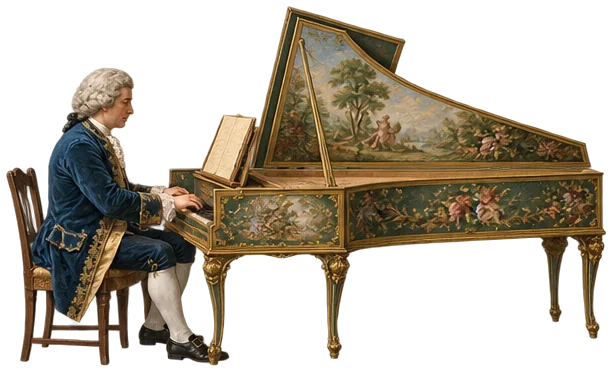
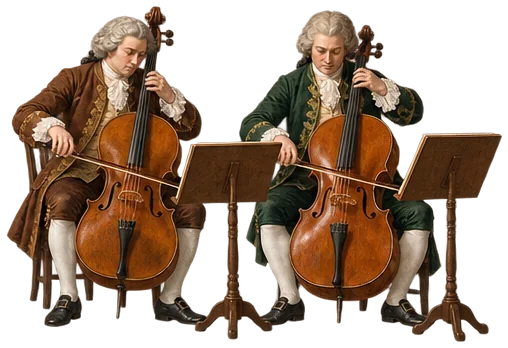
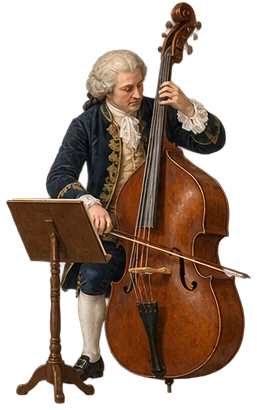
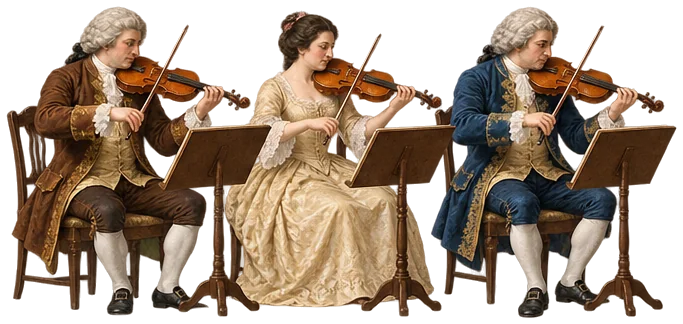
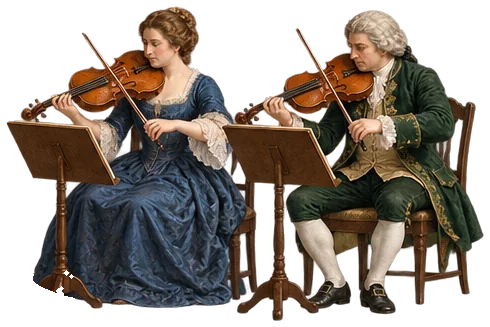
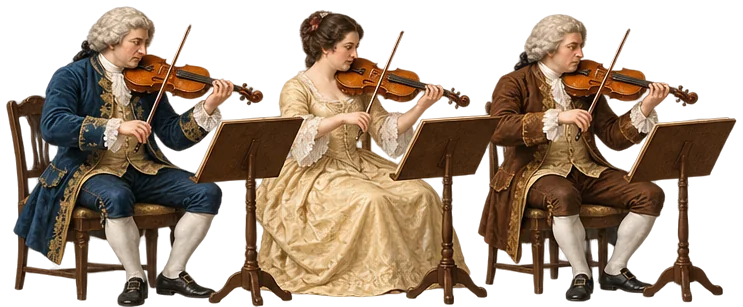
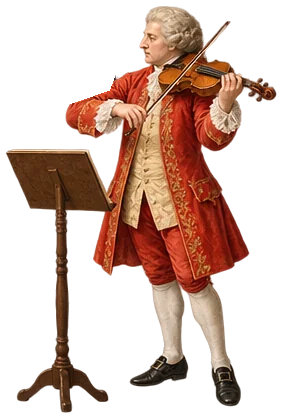
Press Play or the space bar: the players sounding at that moment will light up on the stage, and the sonnet line will appear here. While it is silent, tap any group to find out who they are.
The 1725 print: the opening of Winter
The fourth concerto in the soloist's part-book. The Winter sonnet is the longest of the four, and there are more letters above the notes here than anywhere else - twelve.
Tap an area on the page or an item in the list.
The 1725 print: chattering teeth
The next page of the same movement.
Tap an area on the page or an item in the list.
The “Winter” sonnet, printed before the music
Before the music, the soloist's part-book has four sonnets, one for each season. To the left of the lines stand capital letters. The same letters stand above the notes, so you can see which line the music belongs to.
Tap an area on the page or an item in the list.
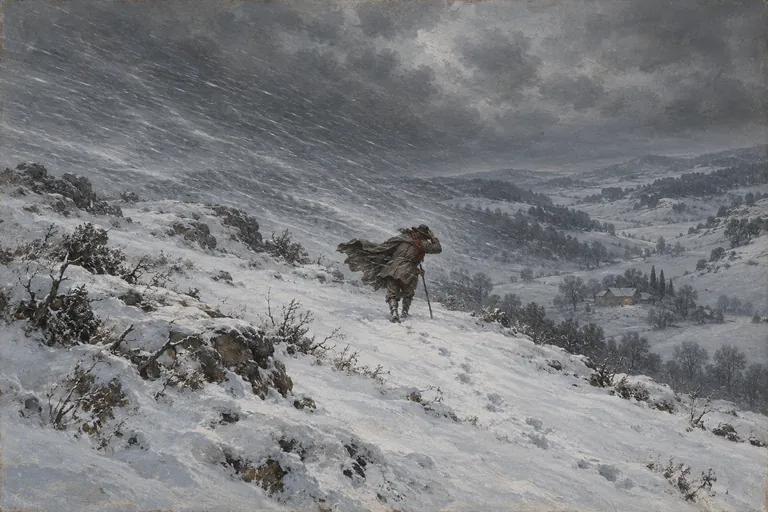
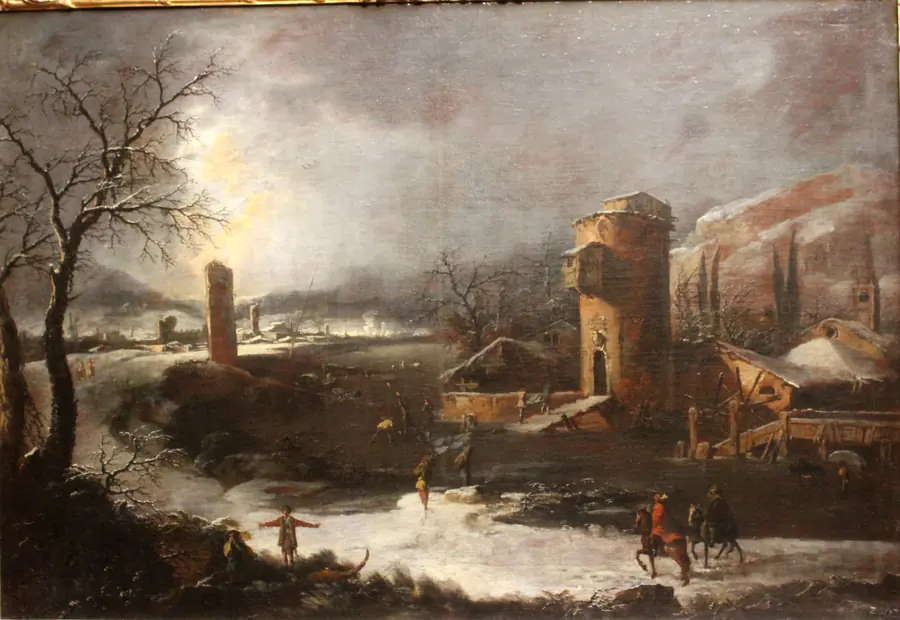
Marco Ricci, Winter Landscape
Marco Ricci (1676-1730) was born in Belluno, a small town in the mountains north of Venice, and worked in Venice in the same years as Vivaldi. His winter is the winter of the sonnet: snow, bare trees, people out in the cold. The painting is in Dresden.
Tap an area on the page or an item in the list.

About
Cold shown through the body: to shiver, to run, to stamp one's feet, to have one's teeth chatter.
The colder it gets, the shorter the notes. At the start the orchestra evenly repeats the same note - shivering. When people begin to stamp their feet, the notes become twice as fast. When teeth chatter - twice as fast again.
Hear this
Places worth hearing on their own
0:00 – 0:24
Shivering
There is no melody. The players enter one by one, each with a note of their own, and the notes stand so close together that the sound is harsh. All of them evenly repeat their own.
Worth knowing
An aria in Vivaldi's opera Farnace (1727) begins with the same sounds: the hero sees a ghost and sings "I feel my blood like ice in every vein". For Vivaldi this was the music not only of frost but of fear.
The 1725 score says nothing about what the opening should sound like: only the notes, and the word "tremble" in the sonnet line. Today many orchestras play the opening right by the bridge - the wooden support the strings rest on. The sound turns glassy and cold. The violinist Daniel Hope has said that he asks the orchestra for this from the very first note.
To make the cold audible, violinists also strike the strings. For the stamping feet the same Daniel Hope does not set the bow on the string but throws it so that it bounces by itself. The Italian Fabio Biondi plays the chattering teeth the same way, and his violin sounds like a percussion instrument. In older recordings these are simply very fast notes.
James Jacobs, a presenter on American classical radio, says that every film composer who needed to show cold or suspense has borrowed this opening. The movement itself can be heard in the film John Wick: Chapter 3 (2019).
At the 2006 Winter Olympics in Turin the Italian figure skater Carolina Kostner skated to Winter. In the same year the Swiss skater Stéphane Lambiel won the world championship with a programme set to The Four Seasons.
The first American recording of The Four Seasons was made by the violinist Louis Kaufman at Carnegie Hall in New York on the last nights of December 1947, after midnight. They were in a hurry: from 1 January the musicians' union banned recording. Three years later the record won France's main prize for recordings.
Conversation
What you heard
Share your impressions of what you heard, your feelings, or simply your thoughts out loud.
Only for the name under your comment. Your email is shown to no one.
Quiet here so far. Yours would be the first.