
Spring II: lyrics and translation
The sonnet from the 1725 print, line by line, with a translation. The letters are the ones printed over the notes.
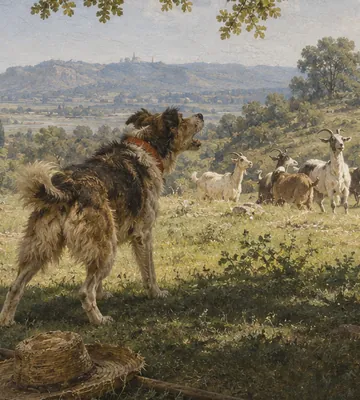
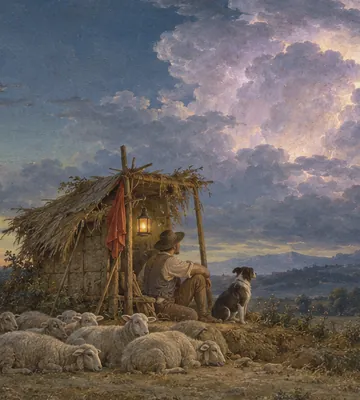
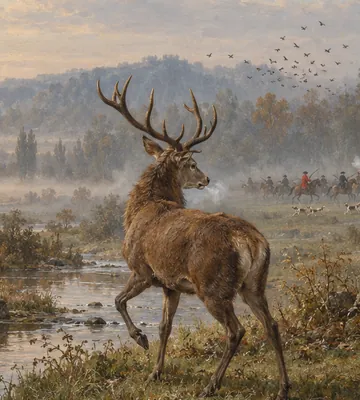
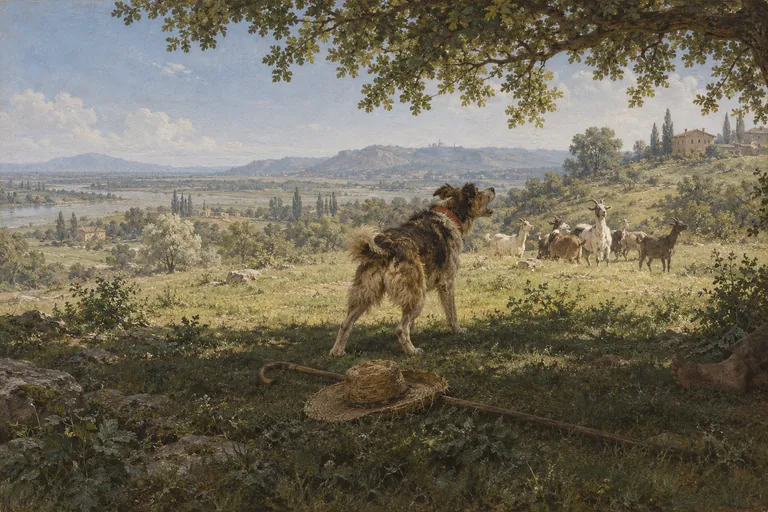
- E quindi sul fiorito ameno prato Al caro mormorio di fronde e piante Dorme ’l Caprar col fido can’ à lato.And so on the flowering, pleasant meadow, to the dear murmur of leaves and branches, the goatherd sleeps, his faithful dog at his side.The soloist is the sleeping goatherd, the violins the leaves, the violas the dog: two notes in every bar, a short one and a long one.In the score, over these bars: «Il Capraro che dorme · Il cane che grida»
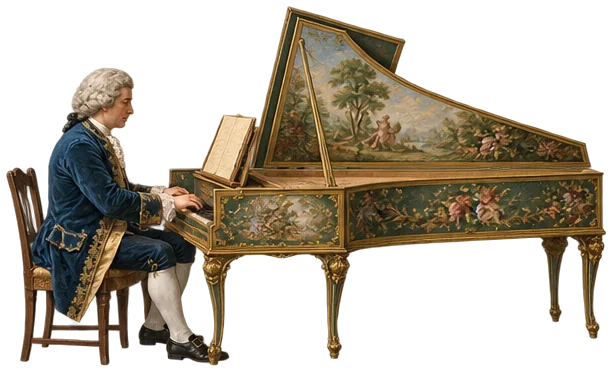
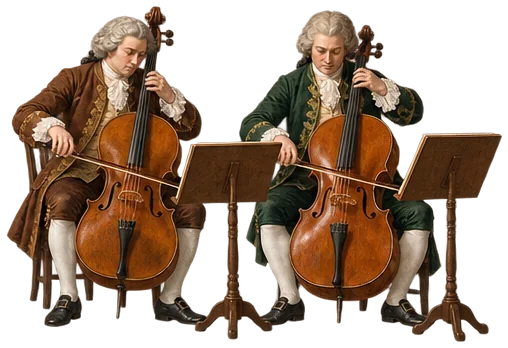
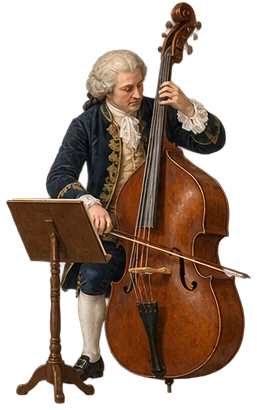
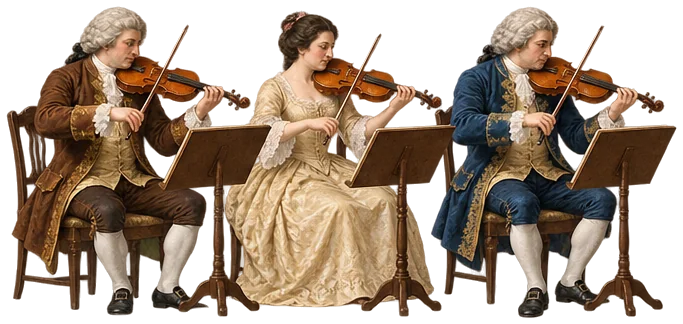
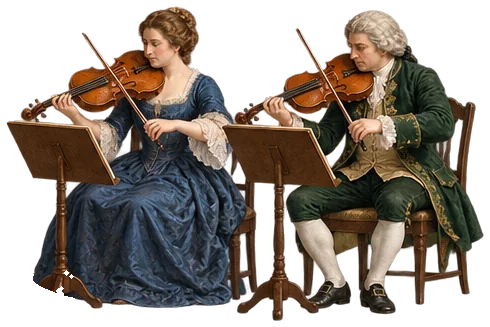
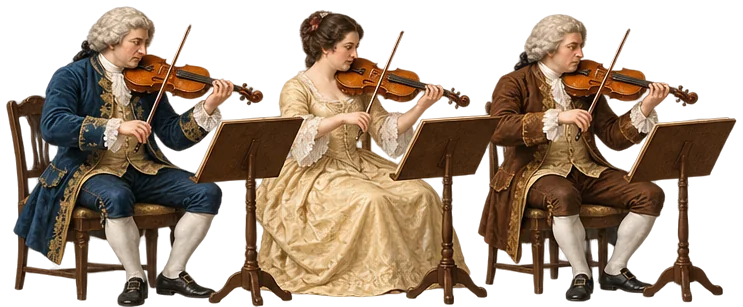
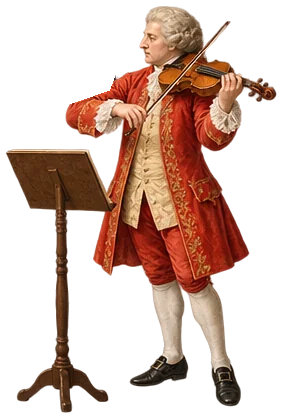
Press Play or the space bar: the players sounding at that moment will light up on the stage, and the sonnet line will appear here. While it is silent, tap any group to find out who they are.
The 1725 print: Spring, second movement
In the soloist's part-book the whole slow movement is three staves at the foot of a page. The sonnet lines are engraved between them.
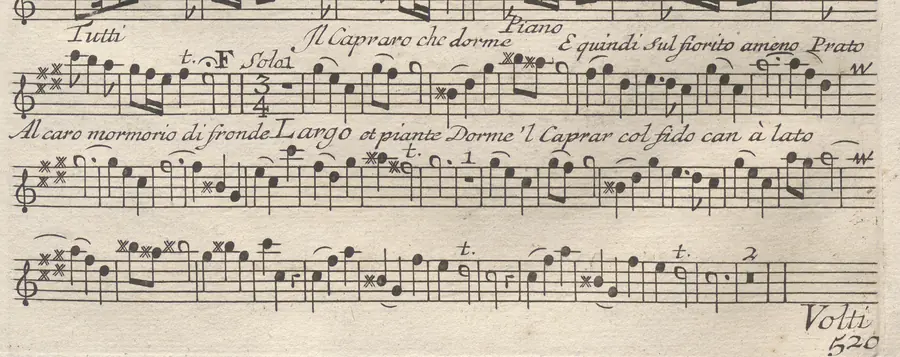
Tap an area on the page or an item in the list.
The viola part-book: “the barking dog”
The same movement in the part-book of the viola, an instrument like the violin but larger and lower. Above its notes stands something the sonnet does not say.
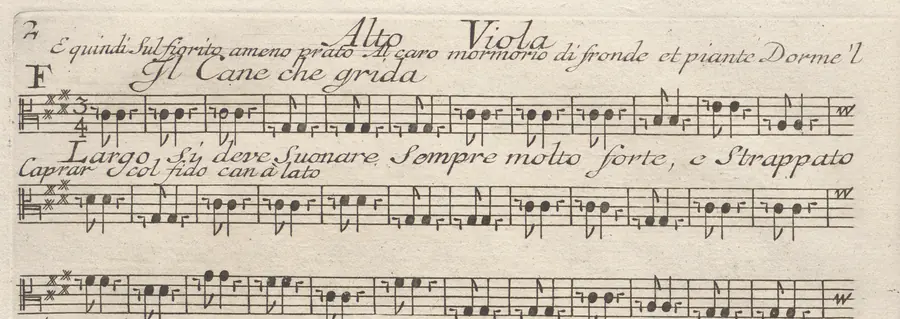
Tap an area on the page or an item in the list.
About
From the first bar to the last, three things are heard: the goatherd sleeps, the leaves rustle, the dog barks.
Nothing happens here: it is a still picture in three layers. The lowest voice in it is the violas, because cellos and harpsichord are silent for the whole movement. That is why the sound is so light.
Hear this
A place worth hearing on its own
0:01 – 0:23
Three layers at once
in the score Il capraro che dorme · Mormorio di frondi e piante · Il cane che grida
The violins rock very quietly on two notes - the rustling leaves. The soloist plays a long, calm melody - the goatherd asleep. In every bar the violas play two notes, a short one and a long one - the dog: woof, woof.
The same thing in another season
The same accompaniment in Summer
The same quiet, broken accompaniment in the violins appears in the slow movement of Summer. Here it is leaves, good to sleep under. There it is flies, which keep one awake.
Worth knowing
In the sonnet the dog does not bark: it only says "the goatherd sleeps, his faithful dog at his side". It is the 1725 viola part that makes it bark. Over the notes is written "the barking dog", with the instruction to play "always very loud and abrupt". The violins, by contrast, are told to play "always very quietly".
In many recordings the dog can hardly be heard: the violas play softly so as not to disturb the melody. In others it barks as written - sharply, on top of everything. Listen to how it sounds in our recording. Martin Pearlman, director of the American orchestra Boston Baroque, has remarked: "How the goatherd sleeps through the barking is not explained."
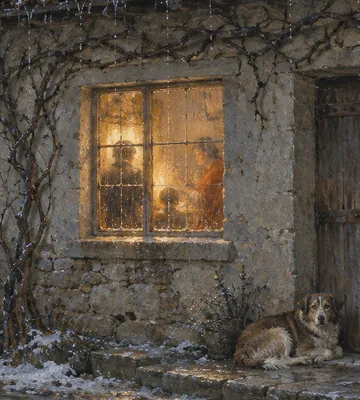
In each of the four seasons the slow movement is about sleep. Here the goatherd sleeps in peace. In Summer the peasant cannot fall asleep, in Autumn everyone who was at the feast is asleep, in Winter people rest by the fire.
In Vivaldi's time a soloist in slow music added ornaments of his own to the written melody, and listeners expected it. In The Four Seasons this is rarely done. The conductor Martin Pearlman suggests a simple reason: every note here is too familiar. And the scholar Michael Talbot, who has studied Vivaldi all his life, warns that under heavy ornament the rustling leaves would not be heard.
Conversation
What you heard
Share your impressions of what you heard, your feelings, or simply your thoughts out loud.
Only for the name under your comment. Your email is shown to no one.
Quiet here so far. Yours would be the first.