
Winter II: lyrics and translation
The sonnet from the 1725 print, line by line, with a translation. The letters are the ones printed over the notes.
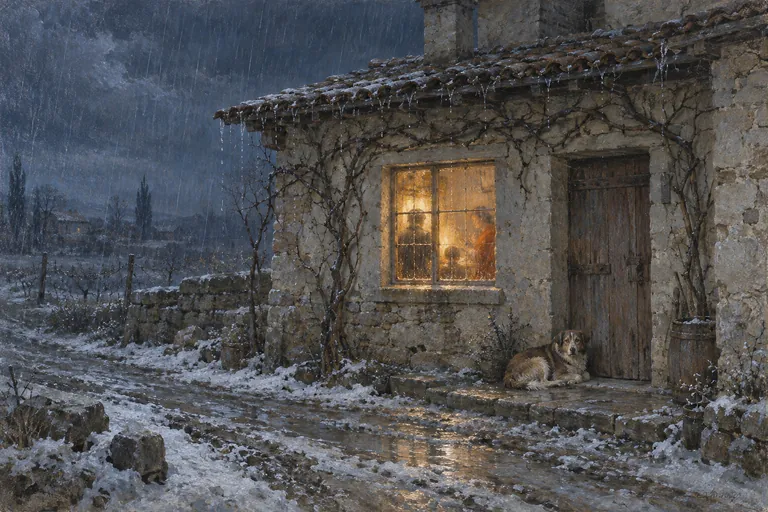
- Passar al foco i dì quieti e contenti Mentre la pioggia fuor bagna ben centoto pass quiet, contented days by the fire while the rain outside soaks a good hundred;The soloist - the melody by the fire; the violins, plucked - rain outside the window; the viola - long quiet notes, the cello keeping an even step.In the score, over these bars: «La Pioggia»
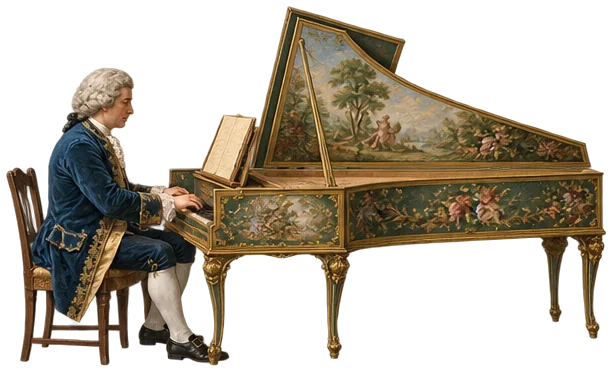
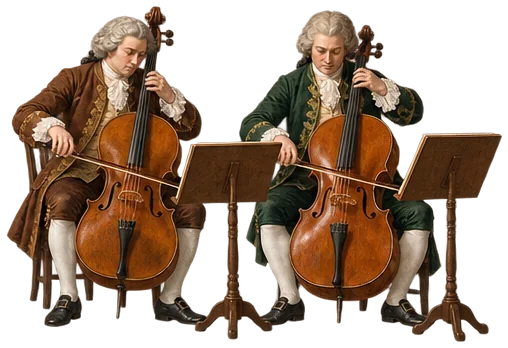
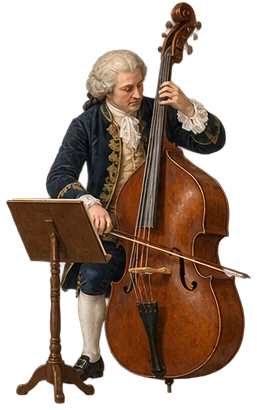
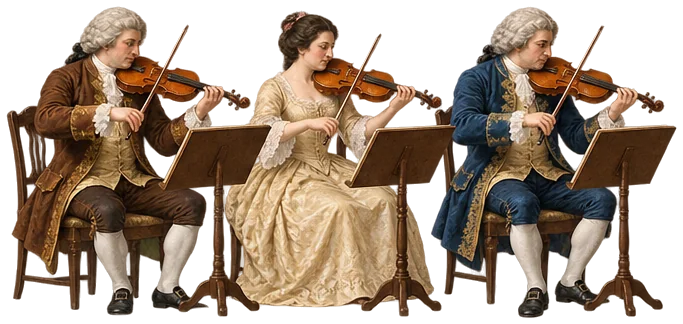
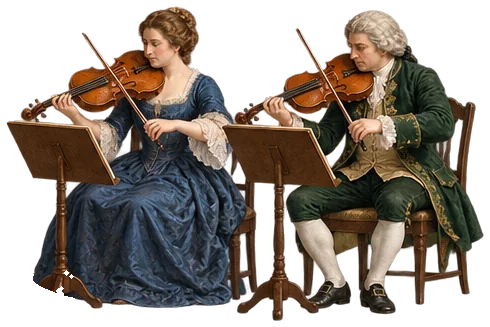
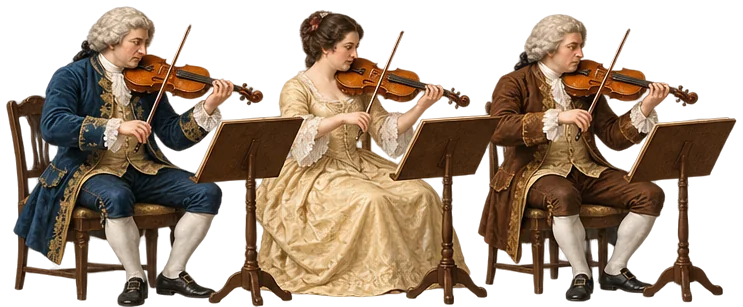
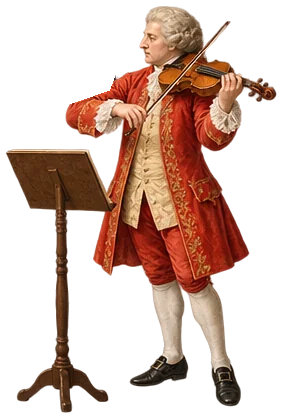
Press Play or the space bar: the players sounding at that moment will light up on the stage, and the sonnet line will appear here. While it is silent, tap any group to find out who they are.
The 1725 print: Winter, second movement
In the soloist's part-book the whole slow movement is three and a half staves. It is the melody by the fire; the rain is played by the other violins and can be seen in their book below.
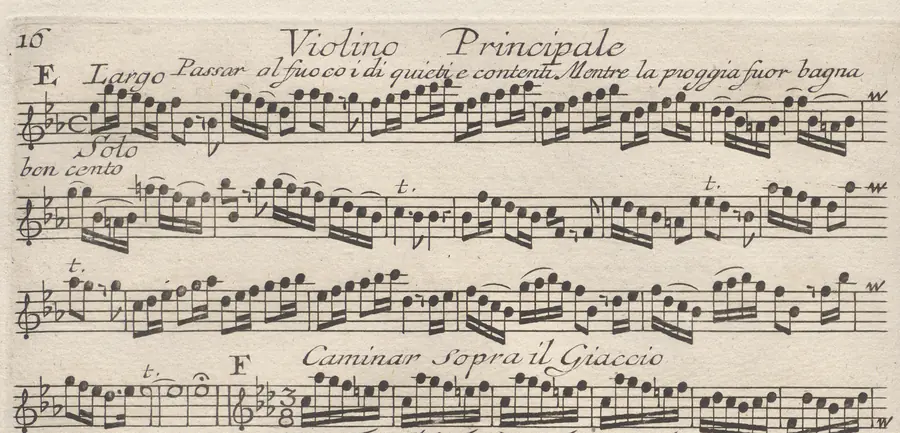
Tap an area on the page or an item in the list.
The first violins' part-book: the rain
The same movement in the first violins' part-book. The soloist plays the melody by the fire, and the rain is written here.
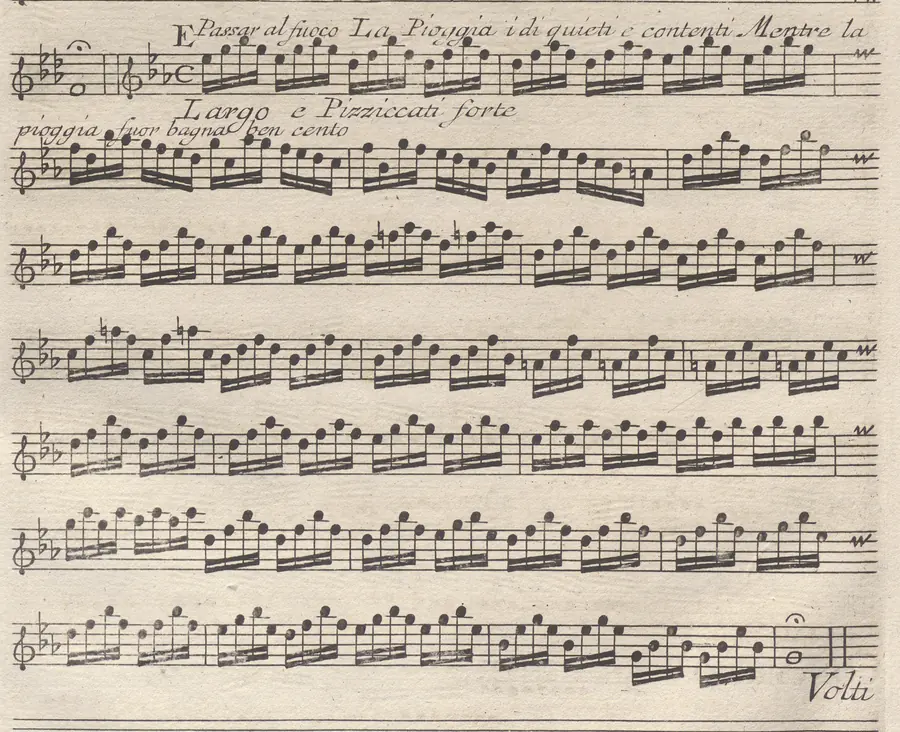
Tap an area on the page or an item in the list.
A caricature of Vivaldi, 1723
A pen drawing made in Rome two years before the Four Seasons came out. It is by Pier Leone Ghezzi, a Roman artist who drew caricatures of well-known people. The drawing concerns the composer himself, not this movement.
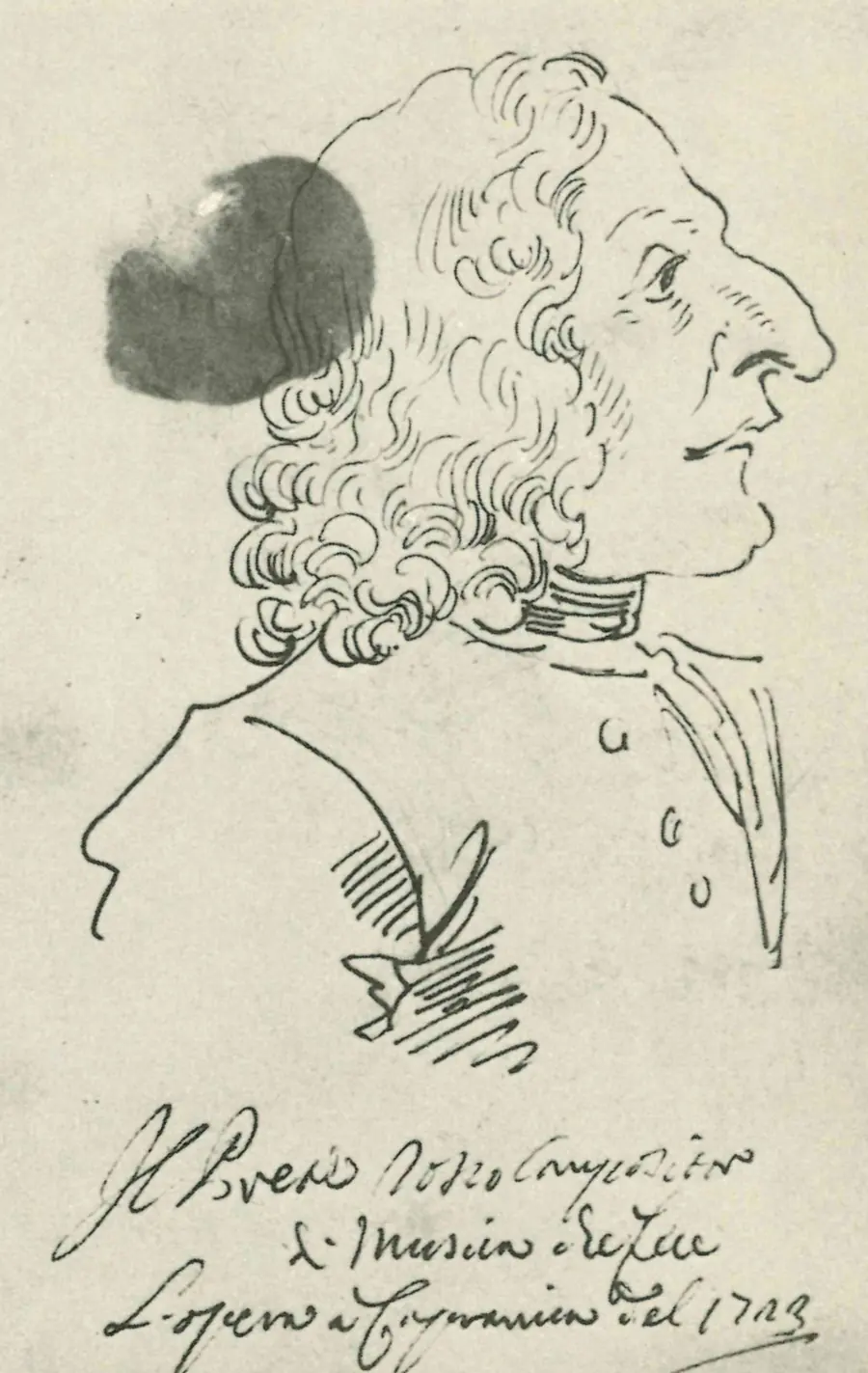
Tap an area on the page or an item in the list.
_Rom,_Bibl_Vat_-_Codici_Ottoboniani_latini_3114,_fol26.jpg)
Engraving of Winter: by the fire
The last sheet of the Venetian series The Four Seasons after designs by Jacopo Amigoni (published no earlier than 1739). Winter here is the same as in this movement of the concerto: keeping warm by the fire while the weather rages around.
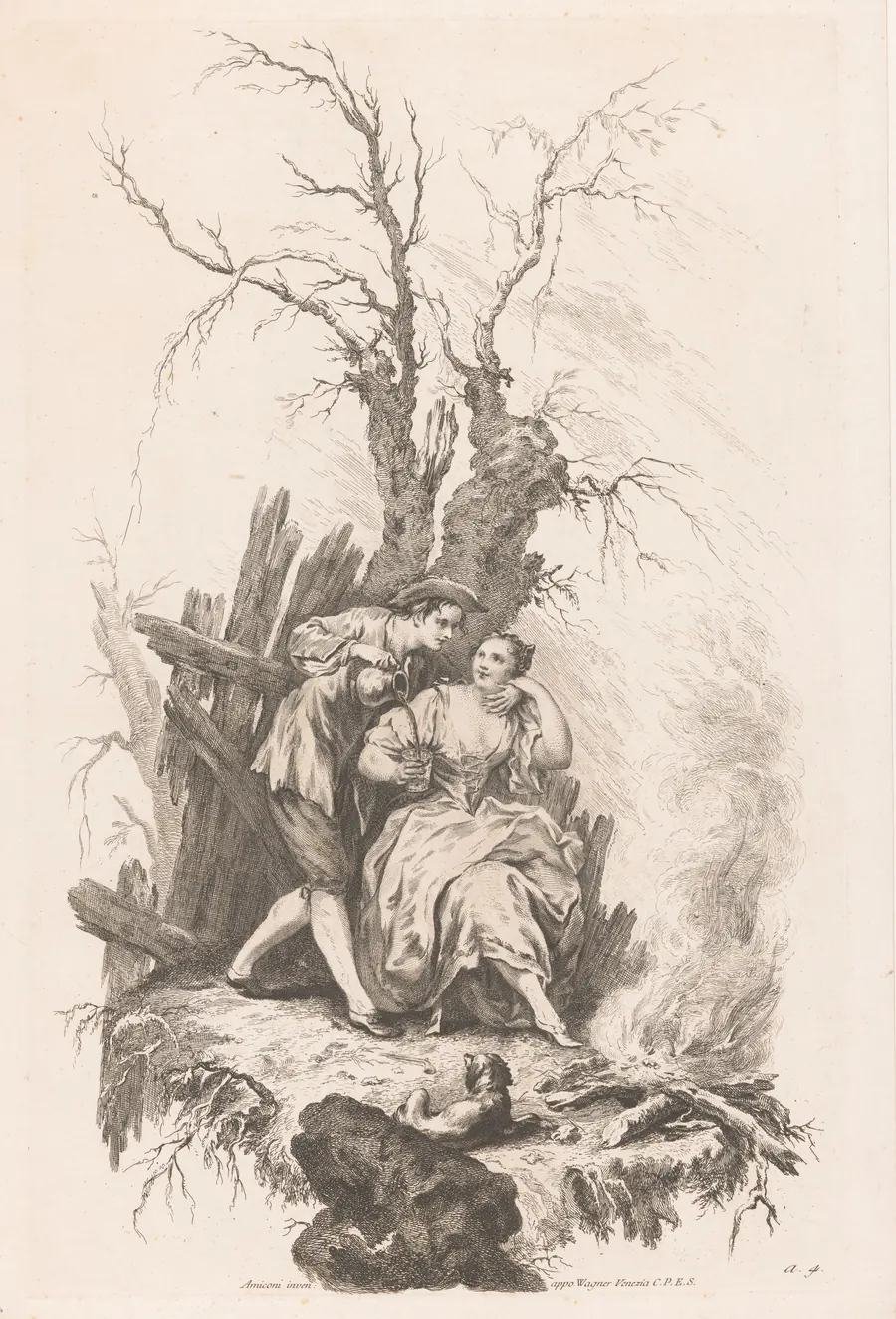
Tap an area on the page or an item in the list.

About
One of Vivaldi's best-known melodies: warmth by the fire while it rains outside.
After the harsh cold of the first movement it is warm here at once: as if we had come indoors and shut the door. Four layers sound together: the soloist's melody, the rain in the violins, the long quiet notes of the viola and the even step of the cello.
Hear this
A place worth hearing on its own
0:01 – 0:23
Rain and fire
in the score La pioggia
The violinists do not use the bow: they pluck the strings with their fingers, so every drop is heard on its own. Above this the soloist plays a long, calm melody - warmth by the fire.
Worth knowing
This movement has two lines of the sonnet: to spend the days by the fire "while the rain outside soaks a good hundred". The comfort of this music is the comfort of someone who got indoors in time. The scholar Paul Everett, who wrote a book on these concertos, also hears in it the smugness of a person who is warm.
The rain is marked "forte" in the 1725 score - loud. This is a downpour, not a drizzle. Vivaldi portrayed rain the same way, with plucked strings, in his opera Giustino: there, over drops like these, a character sings of a "rain of tears".
The 1725 print had one more part - a fast solo cello on a separate loose leaf. In most copies that leaf was lost, so in some recordings the fast cello can be heard and in others it cannot.
Which instrument plays the chords along with the cello - harpsichord, organ or lute - is for the performers to decide. The violinist Rachel Podger has described how her ensemble tried the options: the organ held long notes, the lute plucked, they tried the harpsichord too, and even one hand on the harpsichord and one on the organ - "which was hilarious".
Vivaldi repeated this idea - a melody over raindrops - in a small concerto for recorder, violin and bassoon. But there the layers are fewer, and it lacks the depth of this movement.
Conversation
What you heard
Share your impressions of what you heard, your feelings, or simply your thoughts out loud.
Only for the name under your comment. Your email is shown to no one.
Quiet here so far. Yours would be the first.