



Summer III: lyrics and translation
The sonnet from the 1725 print, line by line, with a translation. The letters are the ones printed over the notes.
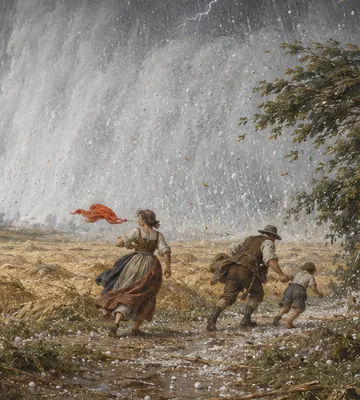
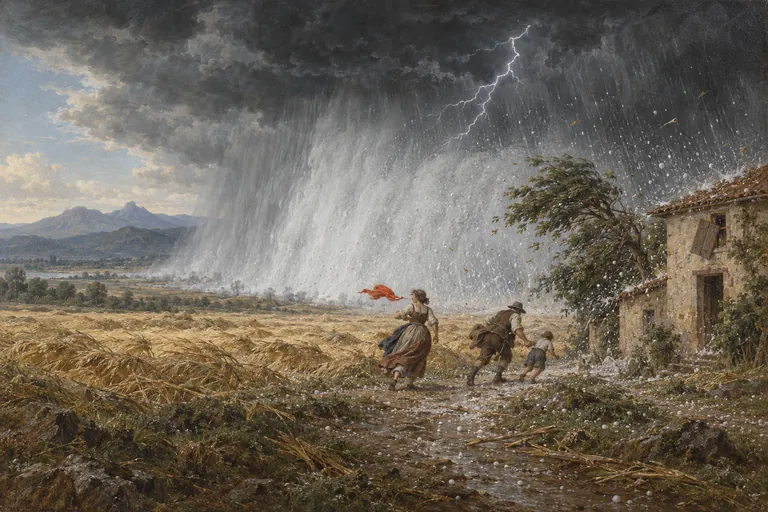
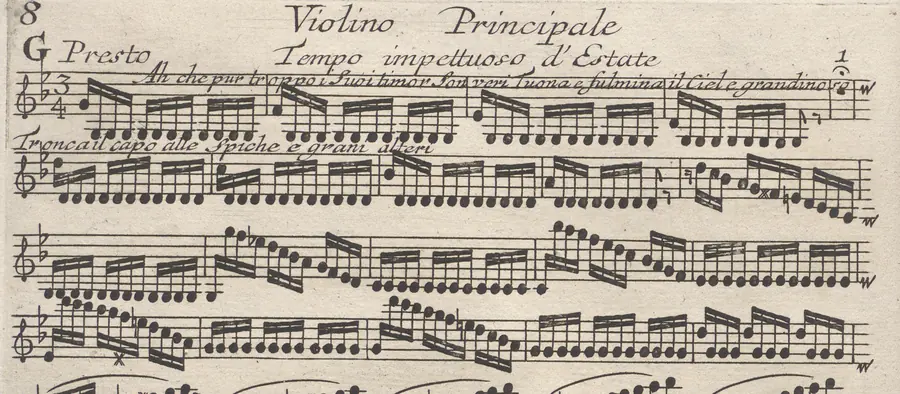
- Ah che pur troppo i suoi timor son veri Tuona e fulmina il Ciel e grandinoso Tronca il capo alle Spiche e à grani alteri.Ah, his fears, alas, come true: the sky thunders and flashes, and with hail cuts off the heads of the ears of wheat and the proud grain.The whole orchestra, fast and loud - the storm; the soloist's quick runs above it - gusts and lightning.In the score, over these bars: «Tempo impetuoso d’Estate»


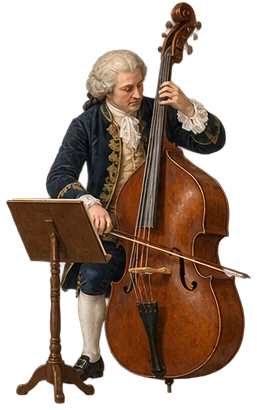

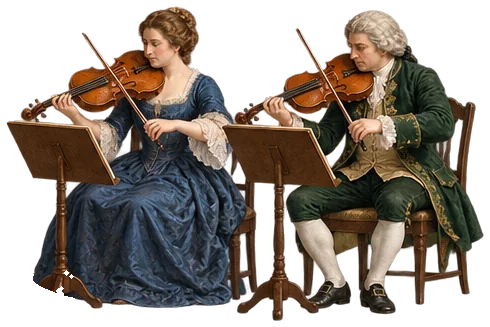


Press Play or the space bar: the players sounding at that moment will light up on the stage, and the sonnet line will appear here. While it is silent, tap any group to find out who they are.
The 1725 print: Summer, third movement
The beginning of the storm in the soloist's part-book. The first staves are almost solid black: these are very fast notes, and most of them are one and the same note repeated many times.
Tap an area on the page or an item in the list.
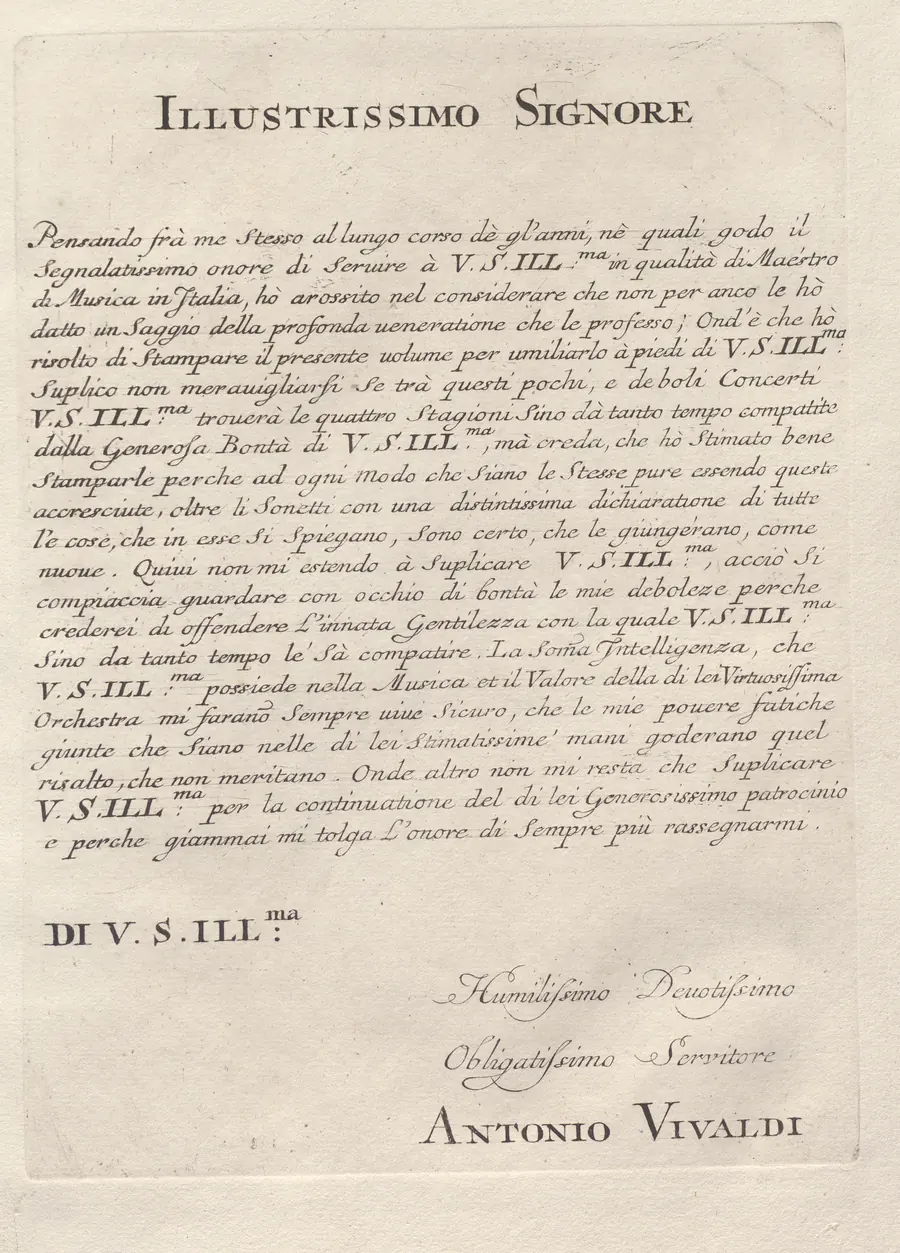
The dedication to Count Morzin
Vivaldi's address to Count Wenzel von Morzin, printed at the front of the collection. Here he himself speaks about the Four Seasons. The page concerns the whole work, not only this movement.
Tap an area on the page or an item in the list.
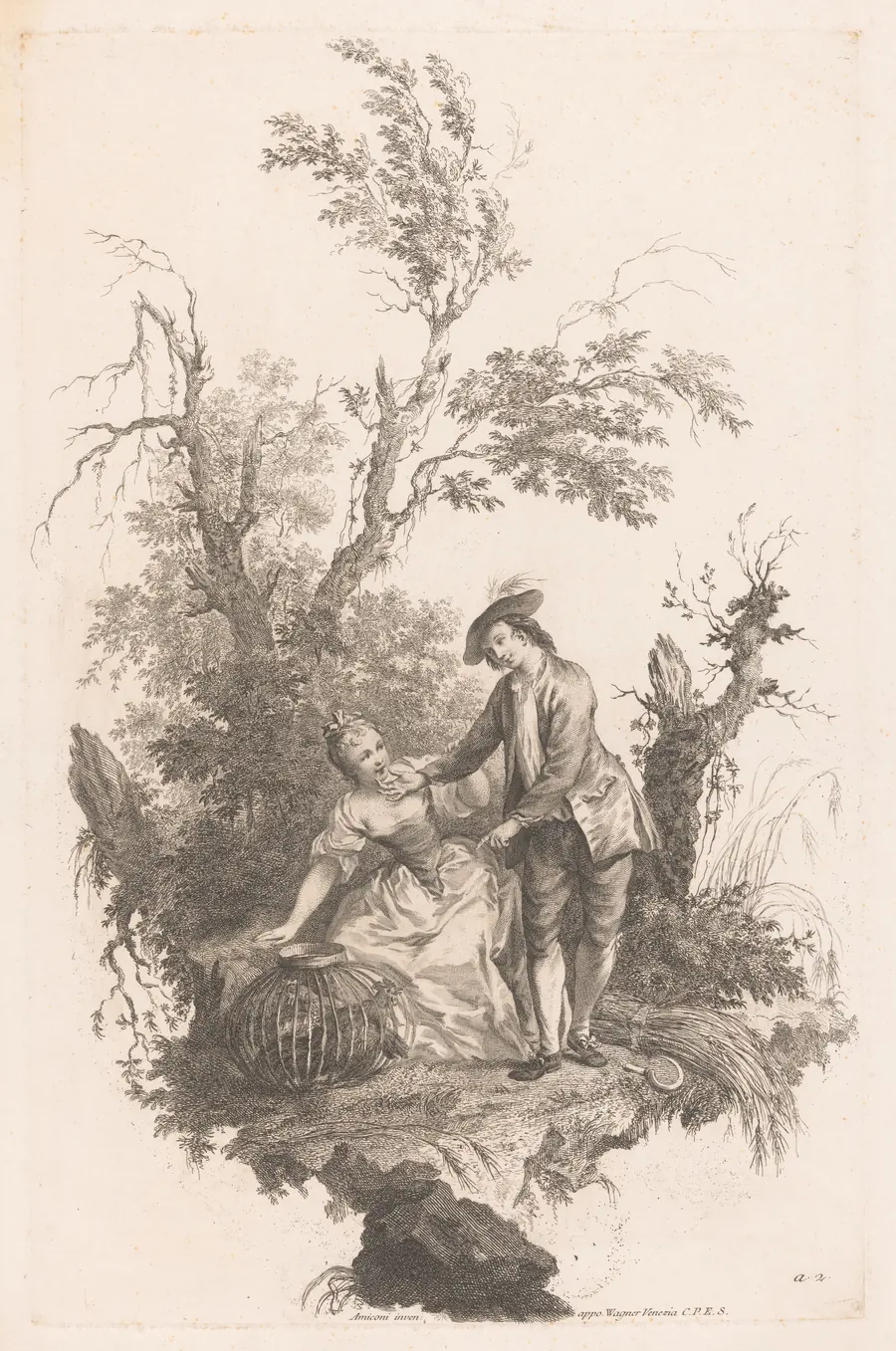
Engraving of Summer: a sheaf and a sickle
The second sheet of the Venetian series The Four Seasons after designs by Jacopo Amigoni (published no earlier than 1739). Summer here is harvest time. In Vivaldi's sonnet that harvest is under threat: a hailstorm destroys the ears of grain.
Tap an area on the page or an item in the list.

About
The storm that the two previous movements were afraid of. The whole orchestra plays fast and loud from the first bar to the last.
There are no quiet places here, and after the storm comes neither sun nor calm: the movement ends as fiercely as it began. These are the best-known three minutes of The Four Seasons; they are often played on their own.
Hear this
Places worth hearing on their own
0:00 – 0:13
Four steps down
in the score Tempo impetuoso d’Estate
The first four bars: each time the first note is one step lower, and then everyone hammers on the lowest string of the violin. This four-note descent was already heard in the wind of the first movement. Now the storm has come.
The same thing in another season
The same winds in winter
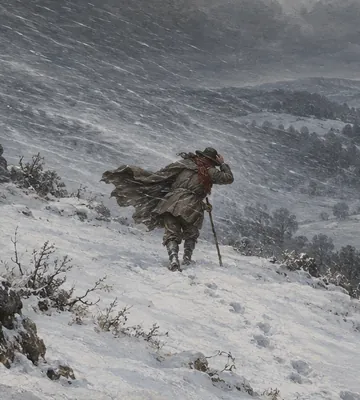
The winds at the end of Winter are written in the same very fast notes. But there the sonnet ends with words about joy, and here with a ruined harvest.
Worth knowing
The plain between the Alps and the Adriatic is still one of the places in Europe where hail falls most often. Most of it comes in June and July, just when the grain ripens.
In the film Portrait of a Lady on Fire (2019) a woman who has never heard an orchestra finally listens to this very movement in a concert hall, and the camera never leaves her face.
This movement is reworked more often than any other. In 1997 the violinist Vanessa-Mae played it over an electronic beat and called it Storm. In the film John Wick: Chapter 2 (2017) an electronic version accompanies a fight in a museum. James Jacobs, a presenter on American classical radio, explains it this way: the music has a "sense of apocalypse", which is why heavy metal guitarists love it too.
The collection in which The Four Seasons was printed has one more concerto about a storm, La tempesta di mare - The Storm at Sea. Vivaldi wrote it with the same means: the whole orchestra rapidly repeats one note while the melody races down and up.
Katie Stillman, leader of the orchestra of the English company Opera North: "The big storm of the 3rd movement doesn't let up until the final note. I always need a breather after Summer."
Conversation
What you heard
Share your impressions of what you heard, your feelings, or simply your thoughts out loud.
Only for the name under your comment. Your email is shown to no one.
Quiet here so far. Yours would be the first.