Autumn I: lyrics and translation
The sonnet from the 1725 print, line by line, with a translation. The letters are the ones printed over the notes.
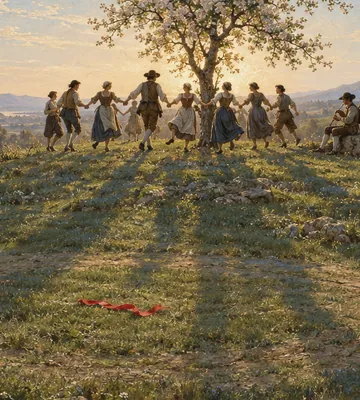
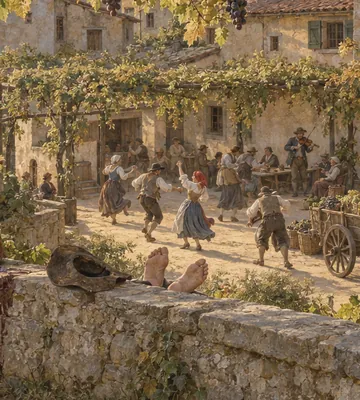
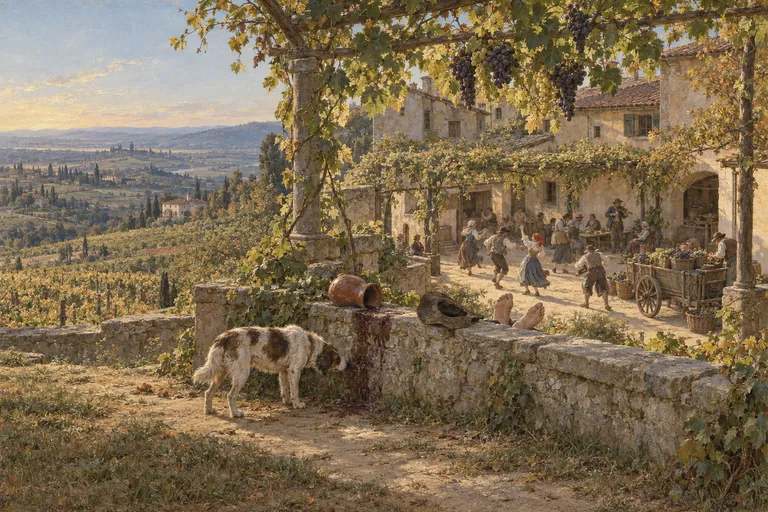
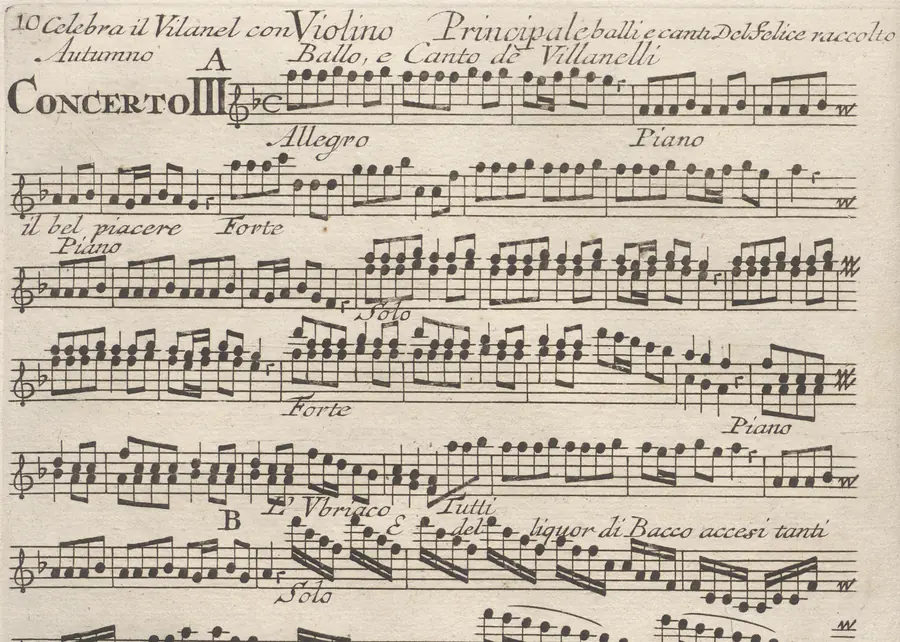
- Celebra il Vilanel con balli e Canti Del felice raccolto il bel piacereThe peasant celebrates with dances and songs the sweet pleasure of a happy harvest,The orchestra - dance and song; this melody will keep returning.In the score, over these bars: «Ballo, e Canto de’ Villanelli»
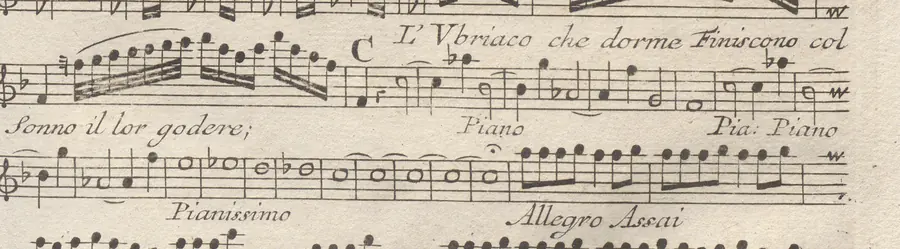
- E del liquor di Bacco accesi tantiand, kindled by the liquor of Bacchus, manyThe soloist staggers: runs downward, sudden stops, long trills - the drunkard.In the score, over these bars: «L’Ubriaco»
- Finiscono col Sonno il lor godereend their enjoyment in sleep.Slow and quiet - sleep; then the orchestra plays the dance again.In the score, over these bars: «L’Ubriaco che dorme»
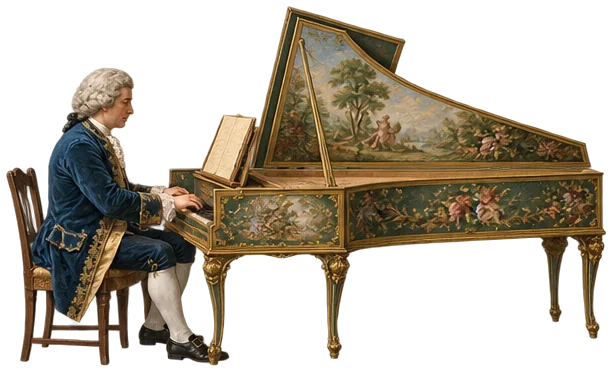
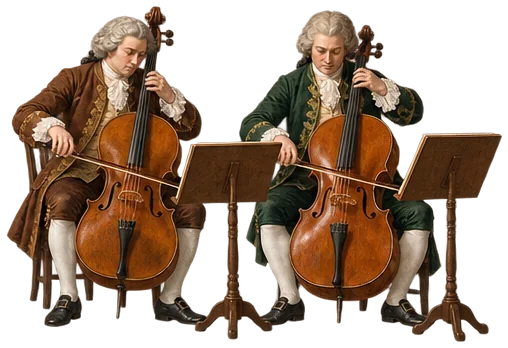
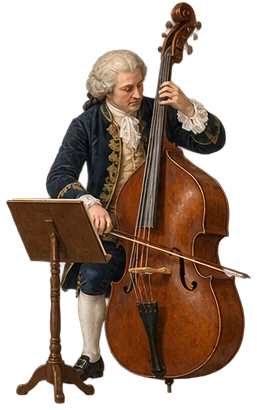
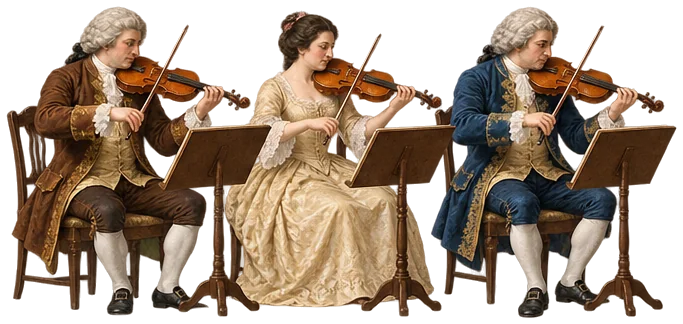
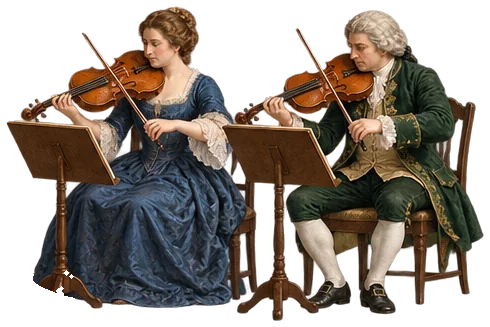
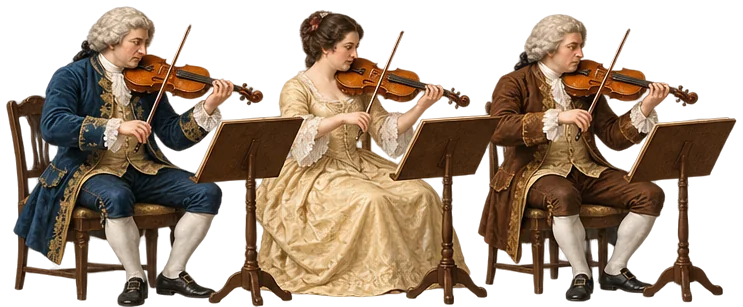
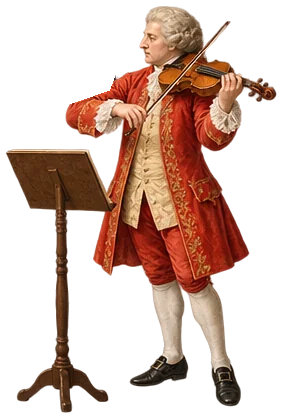
Press Play or the space bar: the players sounding at that moment will light up on the stage, and the sonnet line will appear here. While it is silent, tap any group to find out who they are.
The 1725 print: the opening of Autumn
The third concerto in the soloist's part-book. The first line of the sonnet is printed at the very top of the page, on either side of the part-book's name.
Tap an area on the page or an item in the list.
The 1725 print: the drunkard falls asleep
The end of the first movement of Autumn, on the next page.
Tap an area on the page or an item in the list.
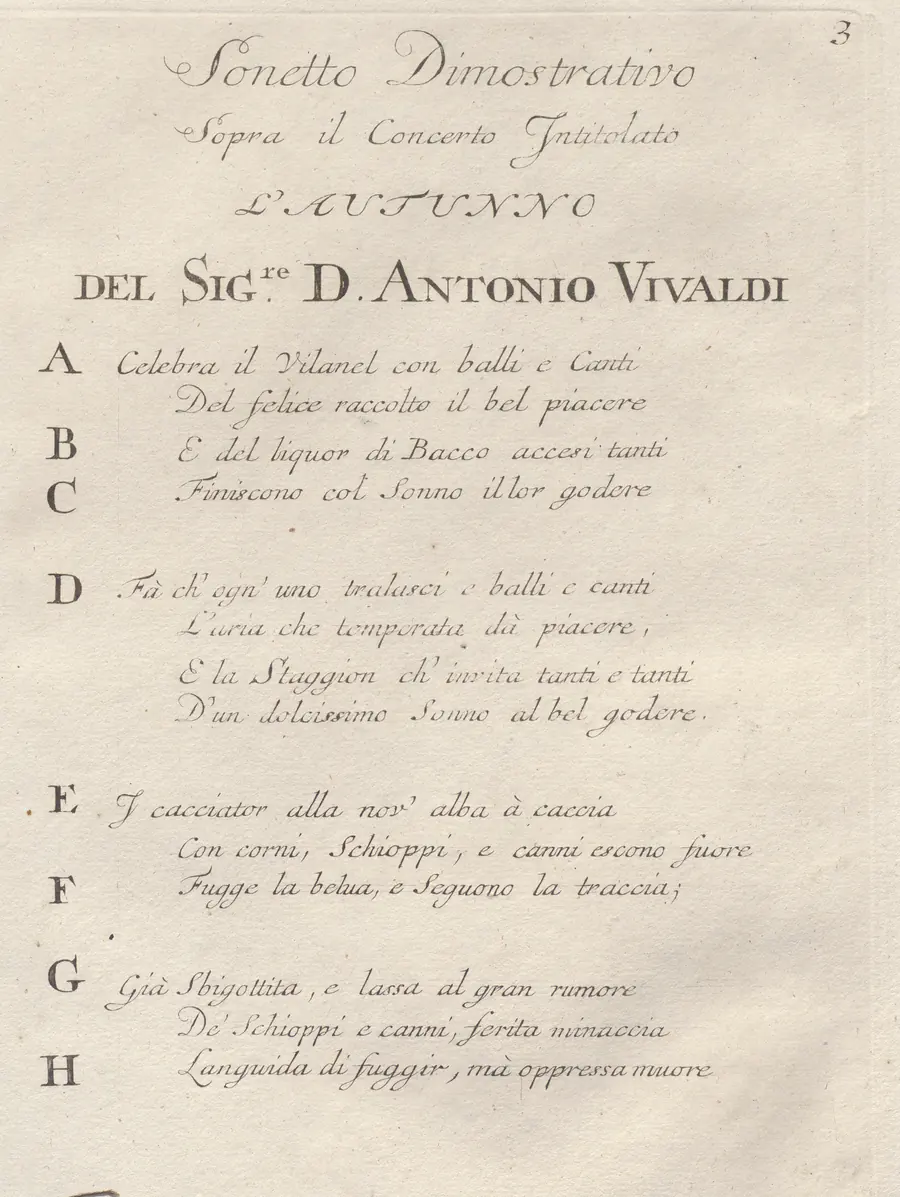
The “Autumn” sonnet, printed before the music
Before the music, the soloist's part-book has four sonnets, one for each season. To the left of the lines stand capital letters. The same letters stand above the notes, so you can see which line the music belongs to.
Tap an area on the page or an item in the list.
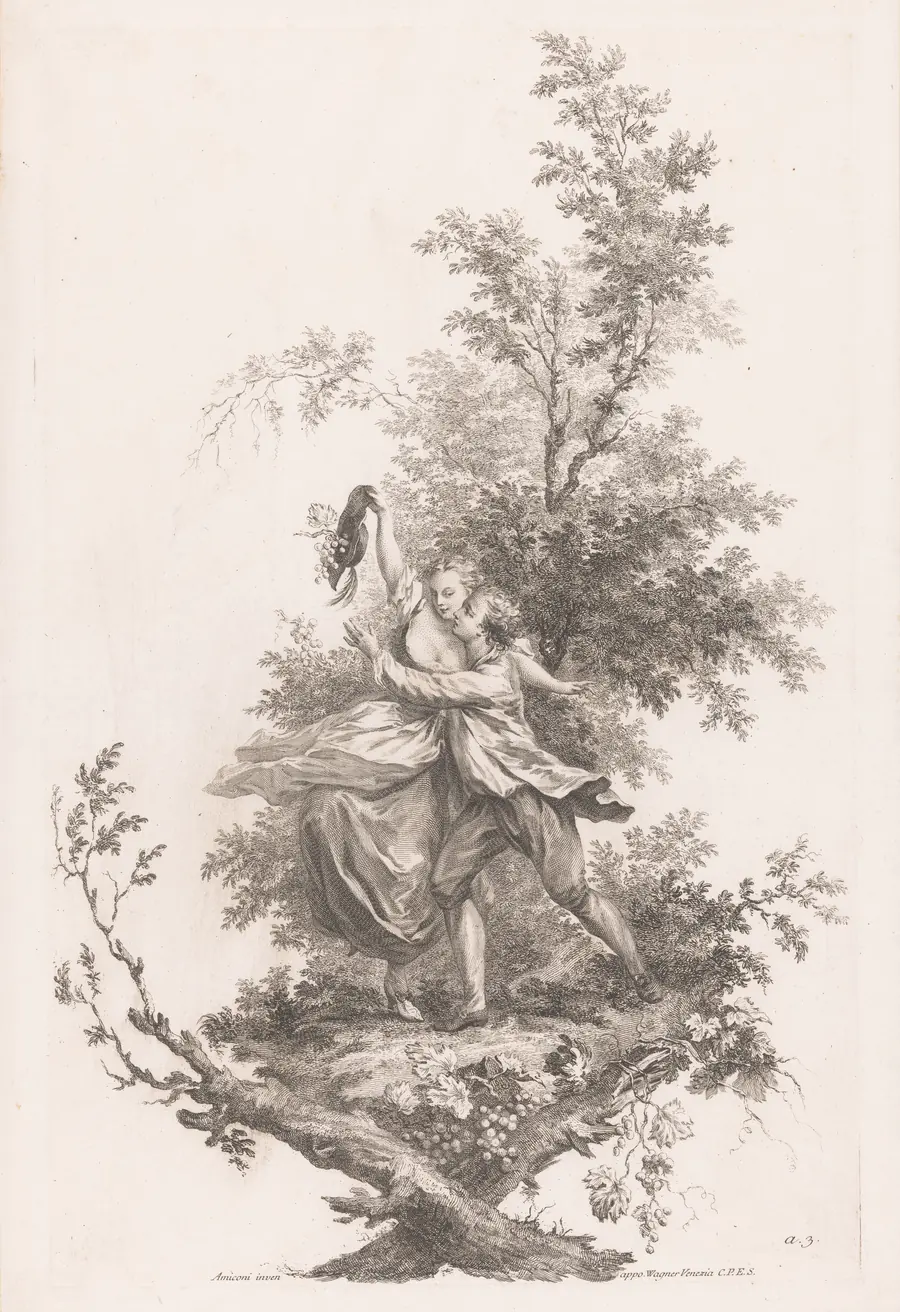
Engraving of Autumn: grapes
The third sheet of the Venetian series The Four Seasons after designs by Jacopo Amigoni (published no earlier than 1739). Autumn here is the grape harvest and merrymaking, as in the sonnet, where the peasants celebrate the harvest with dances and songs.
Tap an area on the page or an item in the list.

About
A feast after the harvest: dance and song. One of the peasants has drunk too much; the soloist shows how he staggers and then falls asleep.
The orchestra's dance returns as a refrain, and between its returns the soloist plays the drunkard. The dance melody is deliberately simple, a peasant tune. The drunkard's music, by contrast, keeps turning away from where it was heading.
Hear this
Places worth hearing on their own
0:00 – 0:15
The dance
in the score Ballo e canto de’ villanelli
A short, simple melody: the orchestra plays it loudly and at once repeats it quietly.
The same thing in another season
A sleep that will last
This short sleep is a rehearsal for the next movement: there everyone is asleep.
Worth knowing
Over the soloist's part in the 1725 score is written "the drunkard", and over the orchestral parts "drunkards", in the plural. From that word on, musicians allow themselves to play unevenly: they speed up and slow down for no reason. Some add jokes of their own - a slide of the hand along the harpsichord keys, or a guitar in the orchestra.
The hunting horn of Vivaldi's time could play only a small set of notes. The whole of Autumn is built on exactly those notes. So the same foundation suits both the village feast here and the hunt in the third movement.
When the soloist is first left alone, he repeats the dance playing two notes at a time. It comes out rather rough. One commentary on this music puts it this way: "as though an old peasant fiddler was trying to join in".
The violinist Peter Spissky has noticed that Autumn is rarely played on its own, apart from the other seasons. The reason is the soloist's role: in the first movement he is clumsy and drunk, in the second he has no part of his own at all, in the third he is hunted.
John Banther, a presenter on American classical radio, said of the sleep at the end of this movement: it sounds as if you had gone back into the pub three hours later - everyone is still there, but everyone has passed out.
Conversation
What you heard
Share your impressions of what you heard, your feelings, or simply your thoughts out loud.
Only for the name under your comment. Your email is shown to no one.
Quiet here so far. Yours would be the first.