

Autumn II: lyrics and translation
The sonnet from the 1725 print, line by line, with a translation. The letters are the ones printed over the notes.
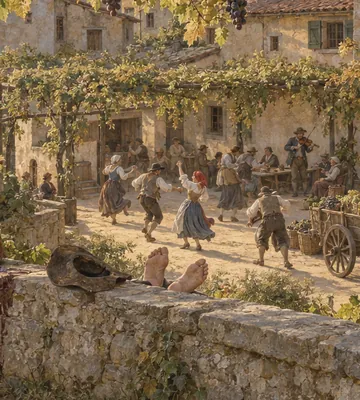
- Fà ch’ogn’uno tralasci e balli e canti L’aria che temperata dà piacere, E la Staggion ch’invita tanti e tanti D’un dolcissimo Sonno al bel godere.Everyone leaves off both dances and songs: the mild air, which gives pleasure, and the season invite so many to the sweet enjoyment of sleep.The orchestra with mutes - quiet chords; the harpsichord spreads them out note by note. The soloist plays with the first violins.In the score, over these bars: «Ubriachi dormienti · Il Cembalo arpeggio»
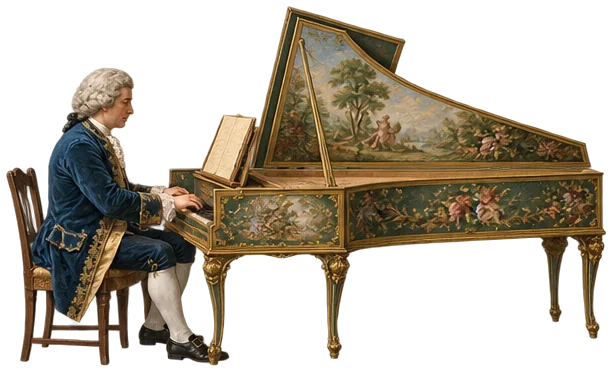
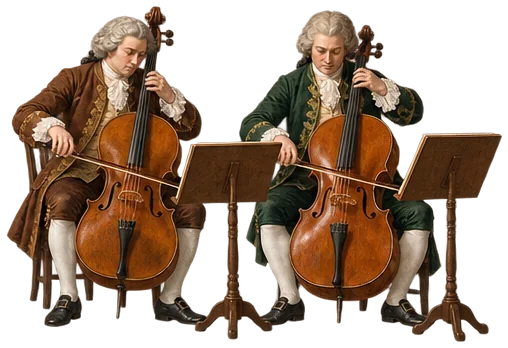
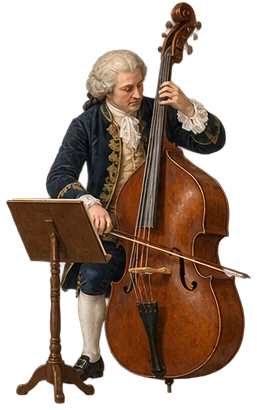
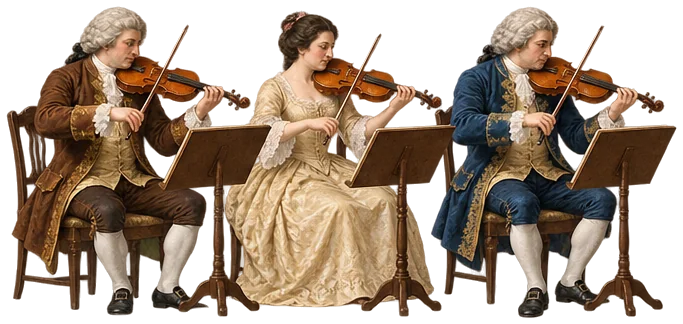
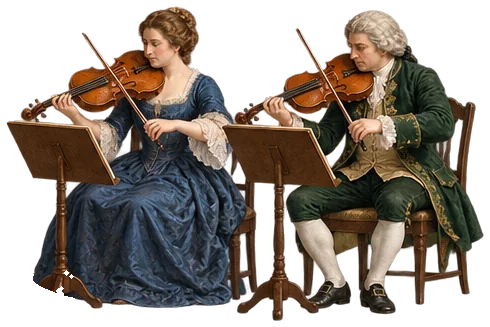
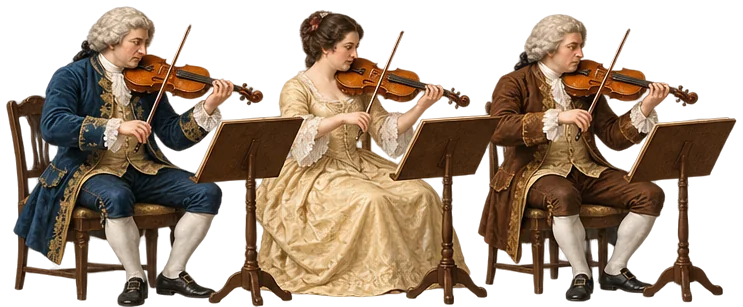
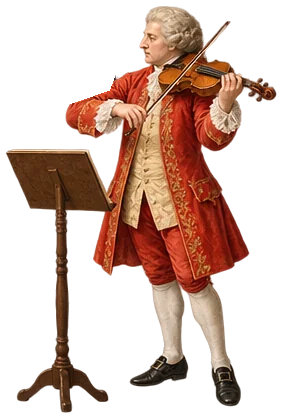
Press Play or the space bar: the players sounding at that moment will light up on the stage, and the sonnet line will appear here. While it is silent, tap any group to find out who they are.
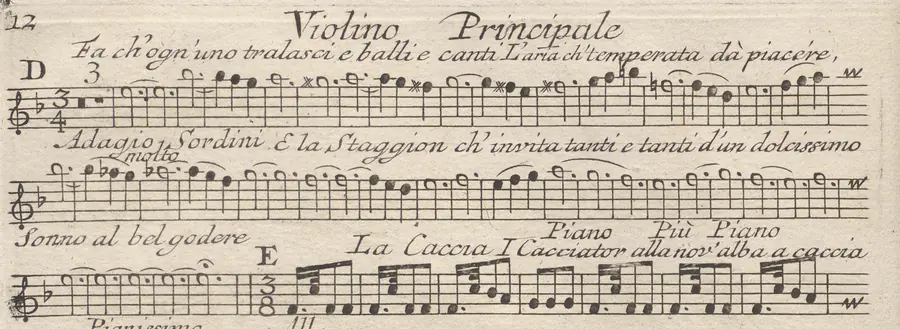
The 1725 print: Autumn, second movement
In the soloist's part-book the slow movement is two and a half staves of long notes. Right after it, on the same staff, the hunt begins. The harpsichord can be seen in the bass part-book below.
Tap an area on the page or an item in the list.
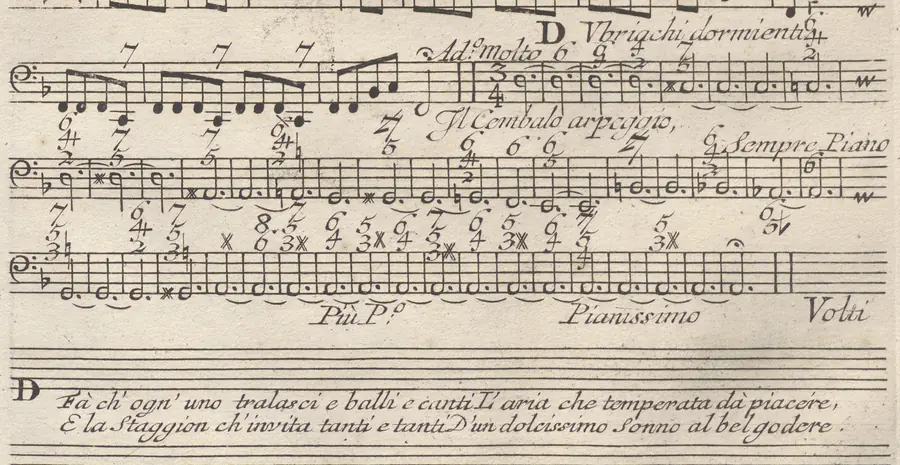
The bass part-book: the harpsichord
The same movement in the “Organo e Violoncello” part-book. The cellos and whoever sat at the keyboard played from it. It carries an instruction found in no other book.
Tap an area on the page or an item in the list.
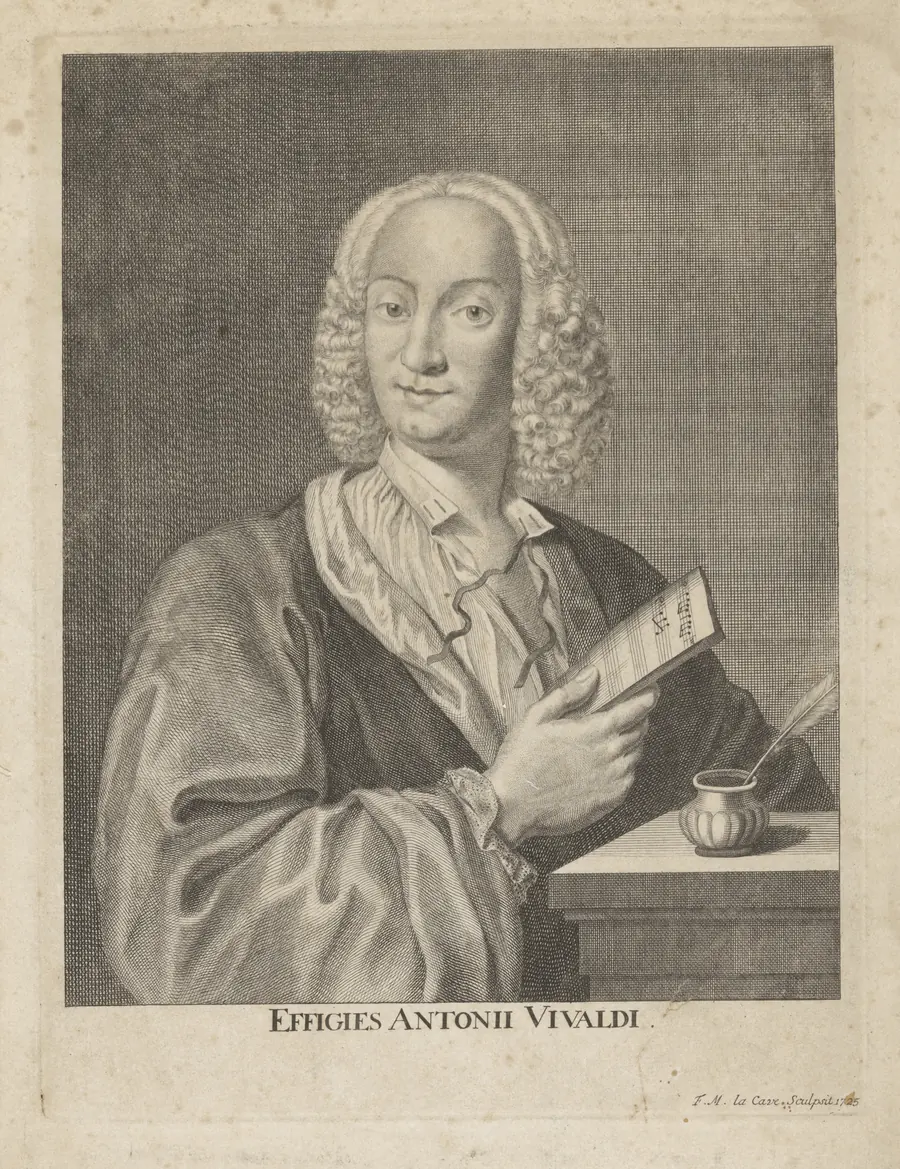
Portrait of Vivaldi, 1725
An engraving from the same year as the first edition of the Four Seasons. In the copy held by the National Library of France it stands at the front of the collection. The portrait concerns the whole work, not only this movement.
Tap an area on the page or an item in the list.
,_RP-P-2016-1496-1.jpg)
About
The feast is over, everyone is asleep. The orchestra quietly holds chords, that is, several notes at once, and the harpsichord spreads them out note by note. The soloist has no part of his own here: he plays with the first violins.
All the strings play with mutes - small clamps on the bridge that dampen the sound. There is no melody, and almost nothing moves. Yet this music is hard to call calm: the chords keep arriving somewhere other than where one expects.
Hear this
A place worth hearing on its own
0:01 – 0:21
The sleepers
in the score Ubriachi dormienti
The orchestra quietly holds chords that slowly follow one another. Only the harpsichord moves: it spreads out each chord note by note.
Worth knowing
The sonnet speaks of "the sweetest sleep". The scholar Paul Everett, who wrote a book on these concertos, hears something else in the music: the confused dreams of drunkards rather than rest.
Vivaldi used this music once more - in his concerto La notte (Night), in a movement called Sleep. And he gave similar music to a prisoner in his opera Tito Manlio (1719), who sings: "Sleep, if you are sleep and not horror". A peaceful sleep would have sounded different from him.
The Canadian violinist James Ehnes says that we know The Four Seasons too well and so fail to notice how inventive they are. His example is this very movement: a violin concerto in which the soloist has no part of his own at all.
For the harpsichord the 1725 score has only three words: "Il cembalo arpeggio" - play the chords spread out, note by note. Which notes exactly, it does not say. So in every recording the harpsichord here is different. The scholar Michael Talbot, who has studied Vivaldi all his life, has remarked that no two performances of this passage ever sound the same.
The violinist Peter Spissky, who has made a study of these concertos, hears in the harpsichord's rippling chords the heavy breathing of the sleepers. He finds no other sign of life in this music.
Conversation
What you heard
Share your impressions of what you heard, your feelings, or simply your thoughts out loud.
Only for the name under your comment. Your email is shown to no one.
Quiet here so far. Yours would be the first.