Spring III: lyrics and translation
The sonnet from the 1725 print, line by line, with a translation. The letters are the ones printed over the notes.
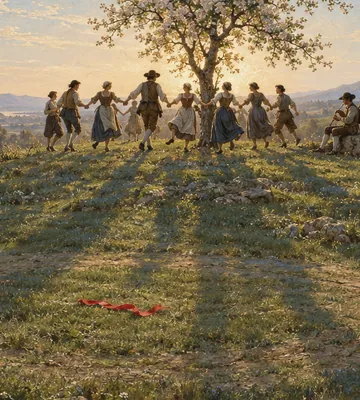
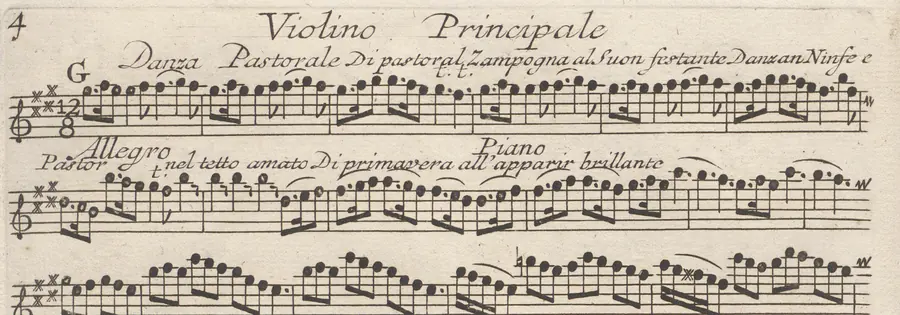
- Di pastoral Zampogna al suon festante Danzan Ninfe e Pastor nel tetto amato Di primavera all’apparir brillante.To the festive sound of the pastoral bagpipe nymphs and shepherds dance under their beloved sky as spring appears in all its brilliance.Long notes in the cellos and violas - the drone of the bagpipe; the soloist - the dance melody.In the score, over these bars: «Danza pastorale»
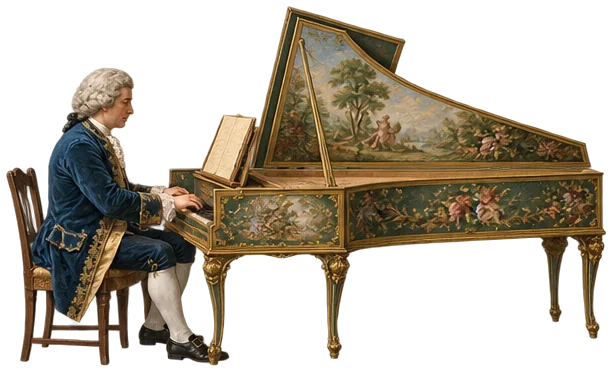
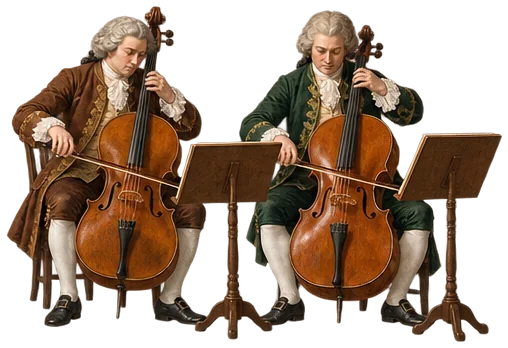
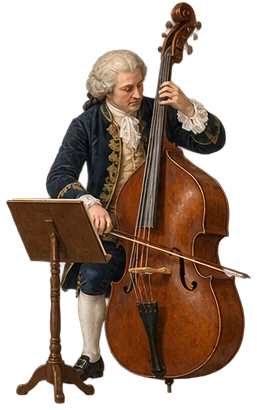
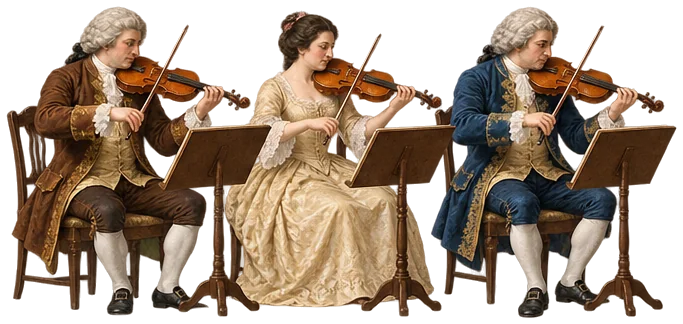
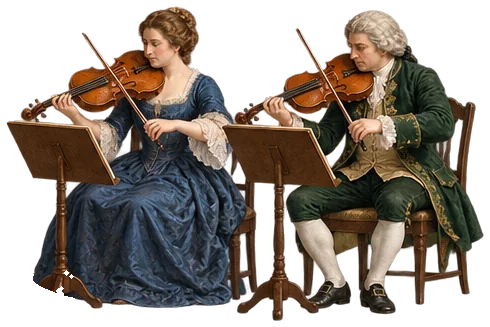
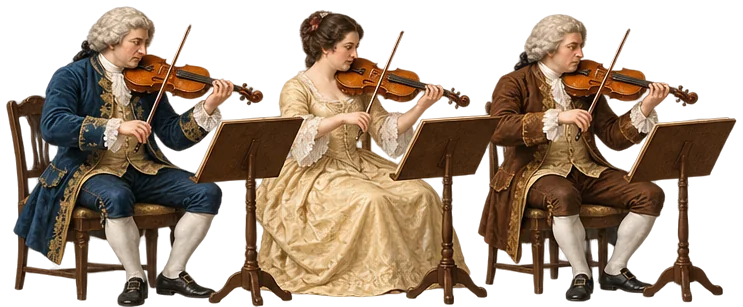
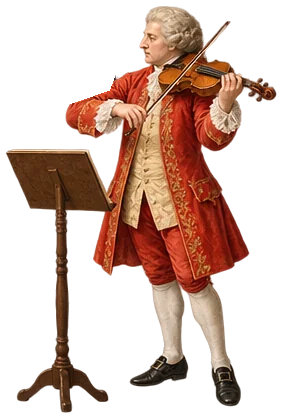
Press Play or the space bar: the players sounding at that moment will light up on the stage, and the sonnet line will appear here. While it is silent, tap any group to find out who they are.
The 1725 print: Spring, third movement
The beginning of the dance in the soloist's part-book. Above the first staff are both the name of the movement and the lines of the sonnet.
Tap an area on the page or an item in the list.
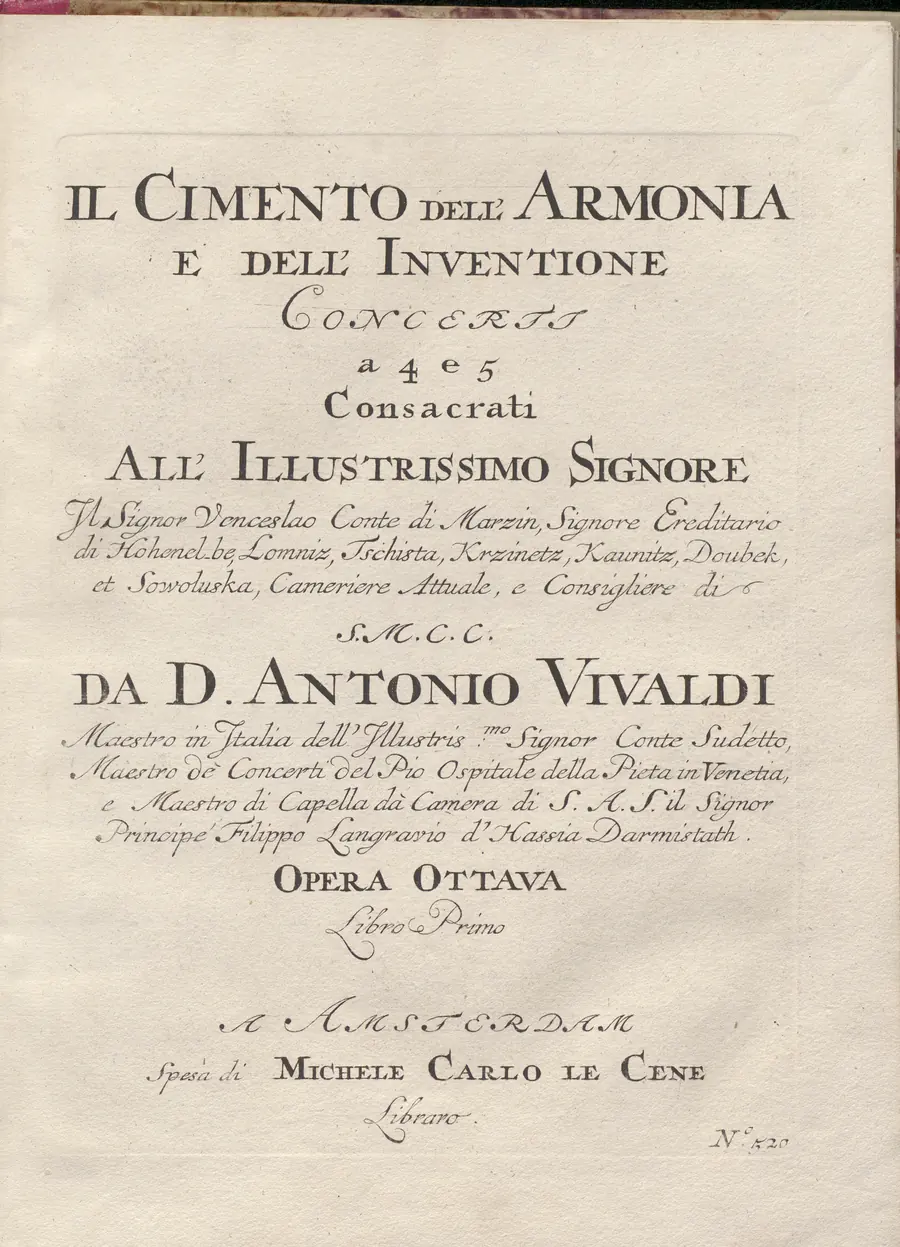
Title page of the collection, 1725
The Four Seasons did not come out on their own but as the first four concertos of a collection of twelve. This is the title page of its first book, printed in Amsterdam. The page concerns the whole collection, not only this movement.
Tap an area on the page or an item in the list.
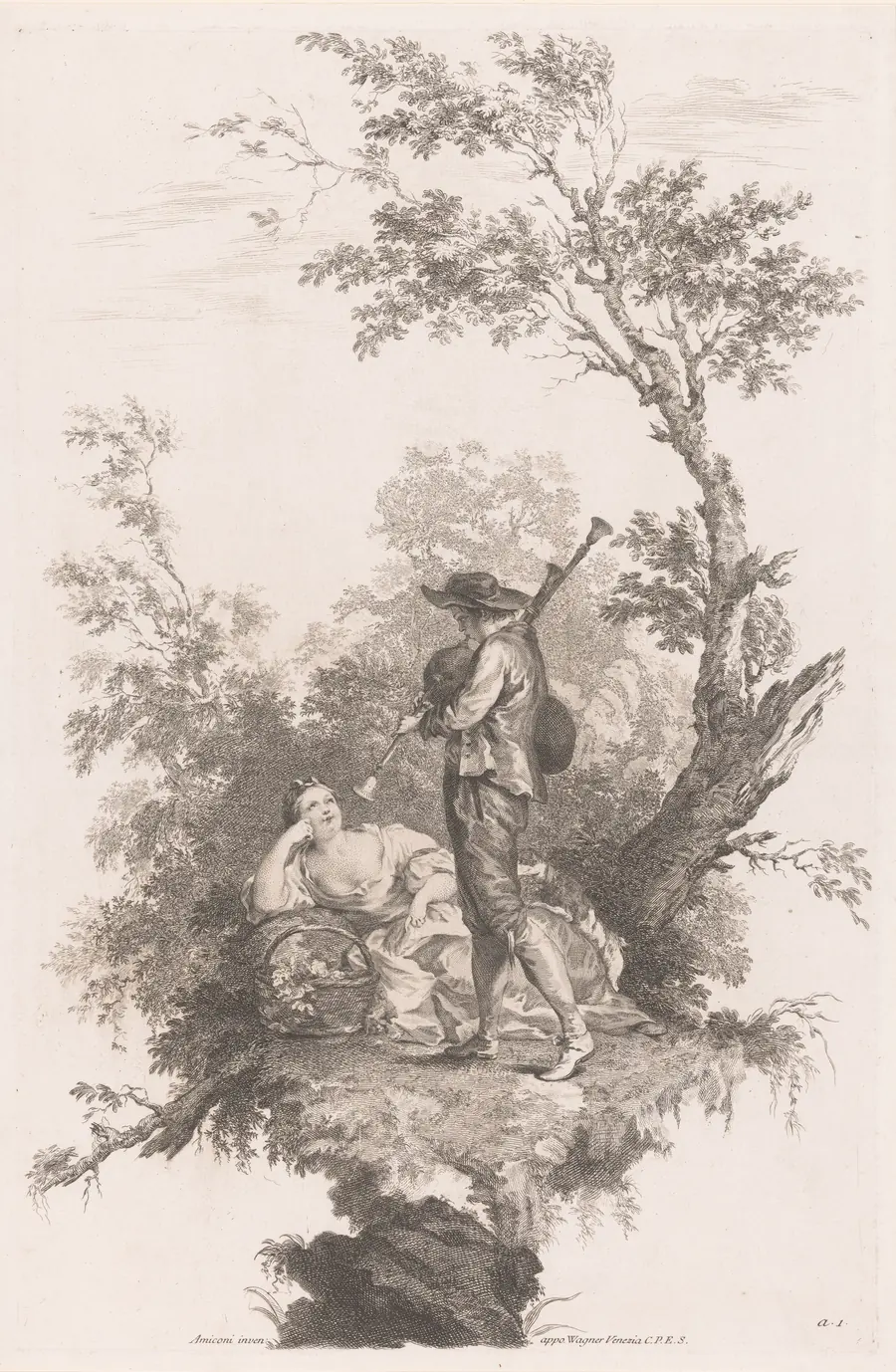
Engraving of Spring: a shepherd with a bagpipe
A sheet from the series The Four Seasons, published in Venice no earlier than 1739 - at least fourteen years after Vivaldi's print. The design is by the Venetian painter Jacopo Amigoni. He shows spring just as the sonnet does: a shepherd plays the bagpipe. This is not a page of music but the same subject as it was seen in the same city.
Tap an area on the page or an item in the list.

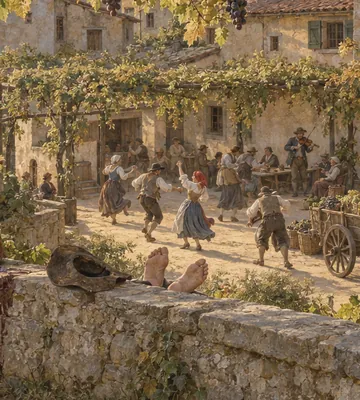
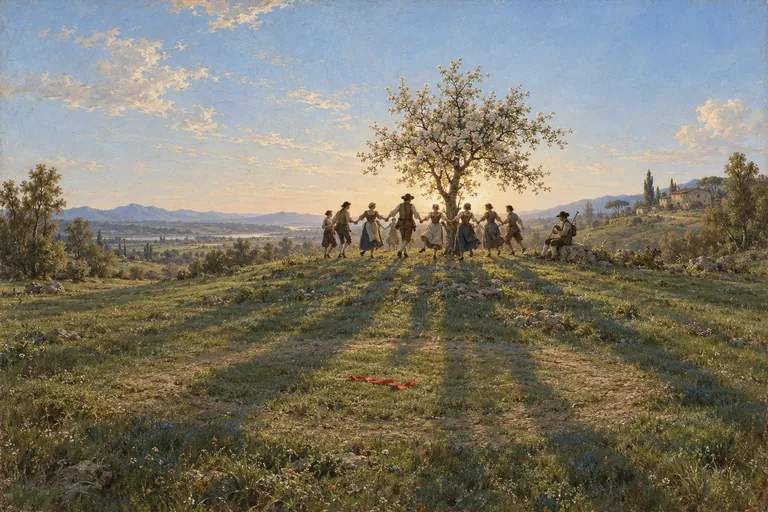
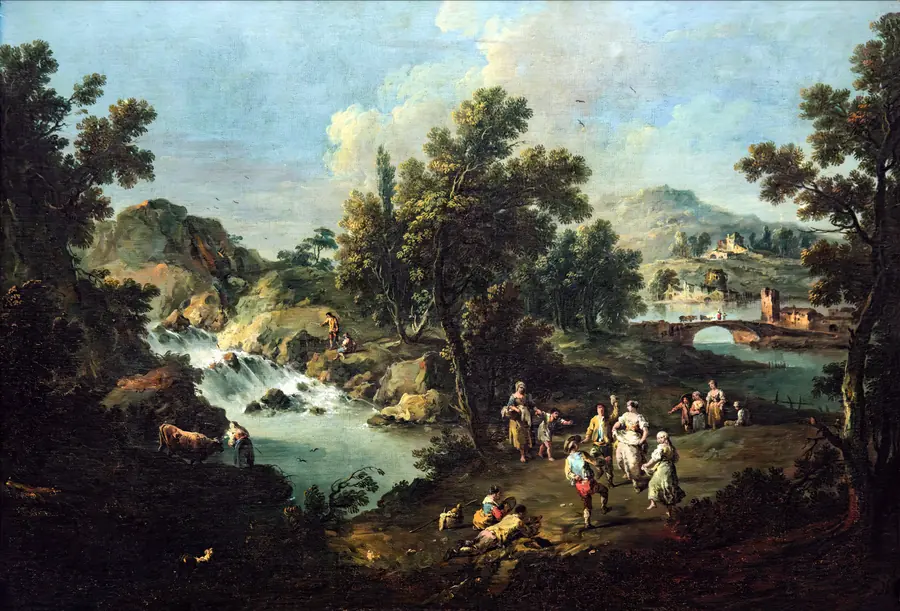
Giuseppe Zais, Landscape with a Stream and Dancing Peasants
Giuseppe Zais painted country landscapes in Venice. He was born in 1709, so the picture is later than The Four Seasons, but it shows what Spring ends with: people dancing under a clear sky. In the sonnet they are "nymphs and shepherds"; in Zais they are peasants by a river.
Tap an area on the page or an item in the list.
_Landscape_with_a_Stream_and_Peasants_Dansing_by_Giuseppe_Zais_-_Gallerie_Accademia.jpg)
About
A country dance to a bagpipe. There is no real bagpipe in the orchestra: its drone is played by cellos and violas.
The music moves in threes, so it sways like a dance. The soloist steps forward several times, and each time the orchestra brings back the shared melody. Before the end the music darkens for a moment, and then the dance returns.
Hear this
A place worth hearing on its own
0:02 – 0:13
A bagpipe without a bagpipe
in the score Danza pastorale
The cellos hold one note, the violas another, for several bars without change. That is how a bagpipe drones: one of its pipes keeps the same sound while the melody is played on another.
Worth knowing
In 1739 the Paris musician Nicolas Chédeville arranged Spring for the musette, the French bagpipe he taught to the king's daughters. The drone that Vivaldi gives to the strings was played there by the bagpipe itself.
The sonnet calls the bagpipe a "zampogna". That is the instrument of shepherds in the south of Italy. In the north, where Vivaldi lived, the bagpipe had other names, most often "piva". So which bagpipe the author of the sonnet had in mind, we do not know.
This is how all music about shepherds was written at the time: long notes below, as on a bagpipe, and above them a melody that sways in threes. The shepherds in the Christmas Concerto by the Italian Arcangelo Corelli and in Handel's Messiah sound the same. A listener in 1725 recognised the sign at once.
Later the drone of the bagpipe passes to the soloist: he plays it himself and keeps the dance going. For that time one violin stands in for the whole bagpipe - both the pipe that drones and the pipe with the melody.
The collection that includes The Four Seasons cost 12 guilders - more than any other printed edition of Vivaldi. Its title page is in the Illustrations tab.
Conversation
What you heard
Share your impressions of what you heard, your feelings, or simply your thoughts out loud.
Only for the name under your comment. Your email is shown to no one.
Quiet here so far. Yours would be the first.