






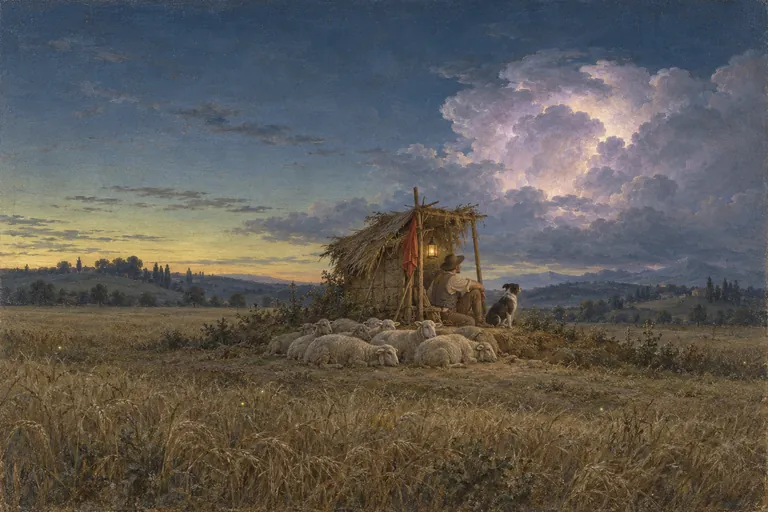
Summer II: lyrics and translation
The sonnet from the 1725 print, line by line, with a translation. The letters are the ones printed over the notes.
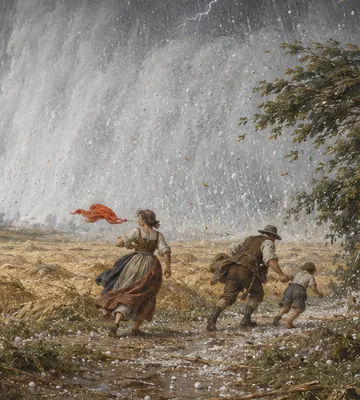
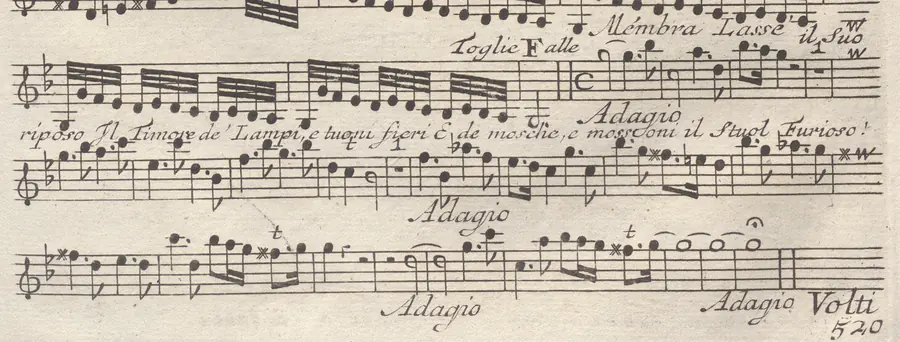
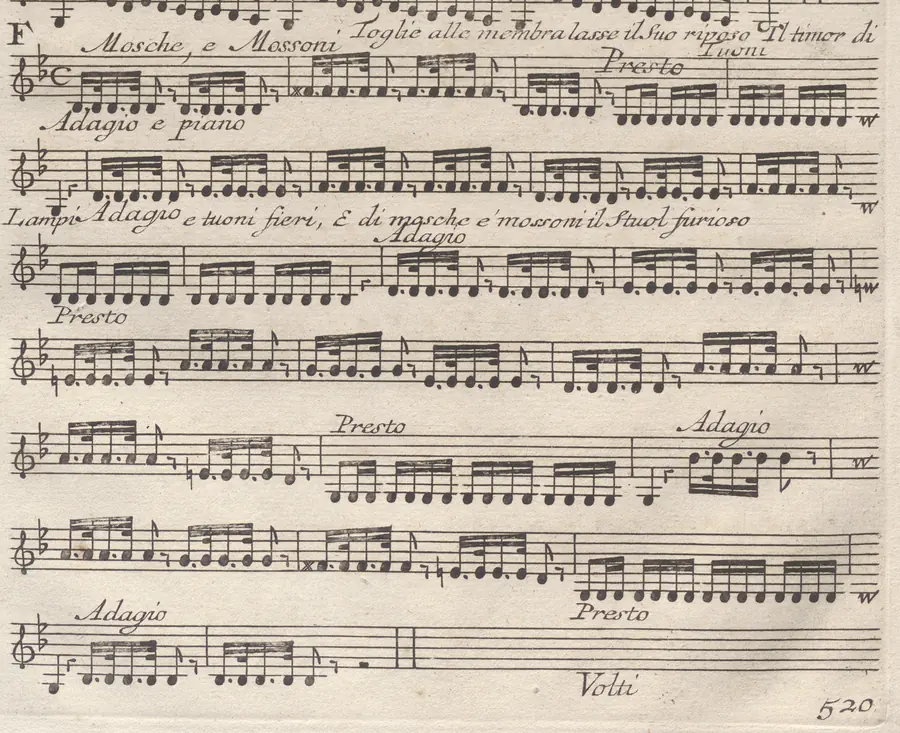
- Toglie alle membra lasse il suo riposo Il timore de’ Lampi, e tuoni fieri E de mosche, e mossoni il stuol furioso!His weary limbs are robbed of rest by the fear of lightning and fierce thunder and by the furious swarm of flies, small and large!Quiet: the soloist is the person trying to sleep, the violins with their broken rhythm the flies. Loud and fast: the whole orchestra - thunder.In the score, over these bars: «Tuoni · Mosche, e Mossoni»
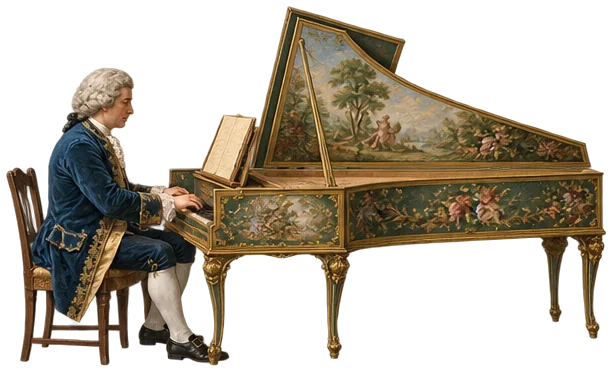
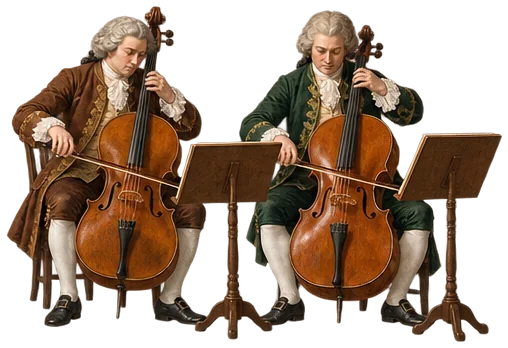
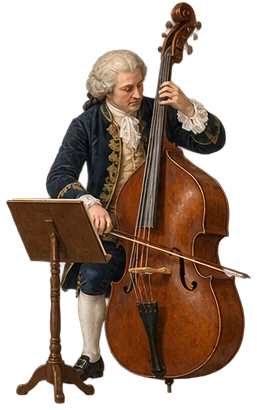
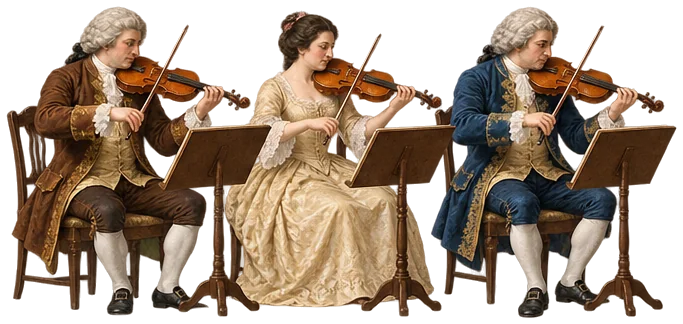
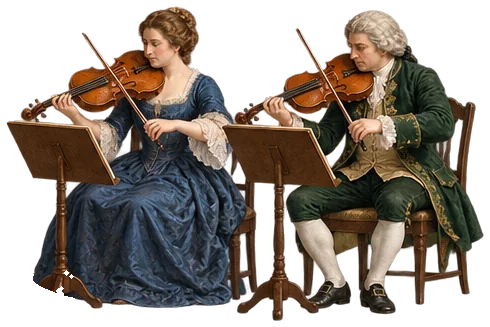
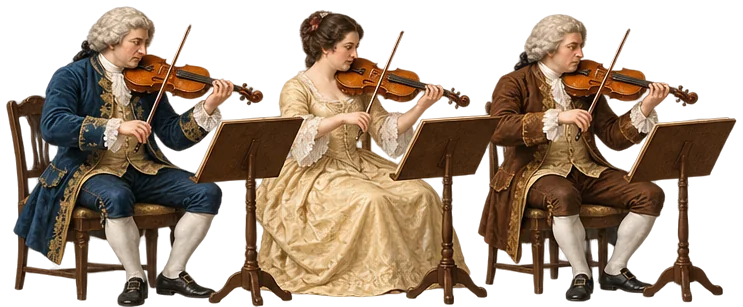
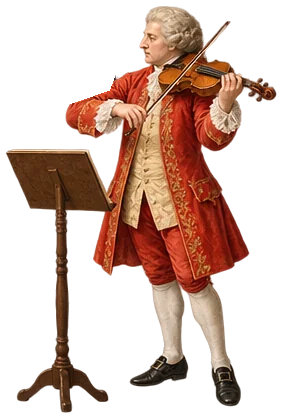
Press Play or the space bar: the players sounding at that moment will light up on the stage, and the sonnet line will appear here. While it is silent, tap any group to find out who they are.
The 1725 print: Summer, second movement
In the soloist's part-book the slow movement takes three staves at the foot of a page. The flies and the thunder are written in the first violins' book, shown below.
Tap an area on the page or an item in the list.
The first violins' part-book: flies and thunder
The same movement in the first violins' part-book. The soloist has only the melody of someone trying to sleep; what keeps him awake is written for the orchestra.
Tap an area on the page or an item in the list.
About
A tired peasant wants to sleep and cannot: flies above him, thunder in the distance. The quiet melody and the loud bursts alternate four times.
This is the only movement of the work in which slow and fast music take turns several times. The thunder is still far away: the storm arrives in the next movement.
Hear this
A place worth hearing on its own
0:01 – 0:19
Flies and thunder
in the score Mosche e mossoni · Tuoni
The soloist plays a quiet, slow melody. Beneath it the violins repeat the same note in a small, broken rhythm - the flies. Then suddenly everything is cut off by a fast rumble from the whole orchestra - thunder.
The same thing in another season
The same accompaniment in Spring
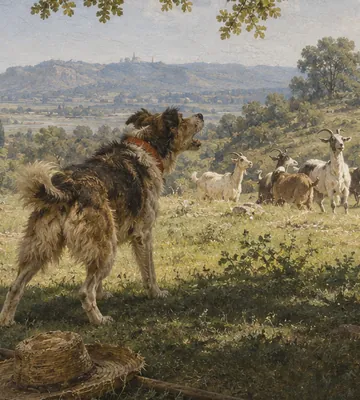
The violins played just as quietly and brokenly in the slow movement of Spring. There it was the leaves the goatherd sleeps under.
Worth knowing
The sonnet has "mosche e mossoni" - flies and big flies, the loudly buzzing kind. Translations sometimes turn them into gadflies, though Italian has a different word for those. And the violinist Katie Stillman, leader of the orchestra of the English company Opera North, hears "some extremely irritating mosquitos" here.
The flies are played by the violins on their lowest notes. The thunder is the violas and cellos, and in the whole movement the violas play one single note. The music stands still here on purpose: the storm has not come yet.
The 1725 score does not say how to imitate the buzzing: it only says "slow and quiet". Some ensembles play the flies right by the bridge - the wooden support the strings rest on. The sound comes out harsh and metallic, really like buzzing. This is a discovery of musicians of our own time.
The violinist Peter Spissky, who has made a study of these concertos, advises playing the soloist's melody the way a lament is sung in opera. This is no lullaby: the person here is suffering.
Conversation
What you heard
Share your impressions of what you heard, your feelings, or simply your thoughts out loud.
Only for the name under your comment. Your email is shown to no one.
Quiet here so far. Yours would be the first.